
A machine can leave the plant in perfect condition and arrive with a bent shaft, cracked control panel, or corrosion inside an enclosure. The difference is often not carrier handling alone. It is whether the best protective packaging for machinery was matched to the machine’s weight, fragility, shipping method, and destination conditions.
For operations teams, machinery packaging is not a purchasing detail. It affects damage claims, installation schedules, labor time, freight cost, customer confidence, and the ability to keep production moving. Time is money, especially when a damaged component delays a line startup or a field repair.
What Makes the Best Protective Packaging for Machinery?
There is no single package that protects every machine. A small precision assembly, a welded industrial skid, and a moisture-sensitive control cabinet have different failure points. The right solution controls movement, distributes weight, prevents contact damage, and protects against the environmental conditions the shipment will face.
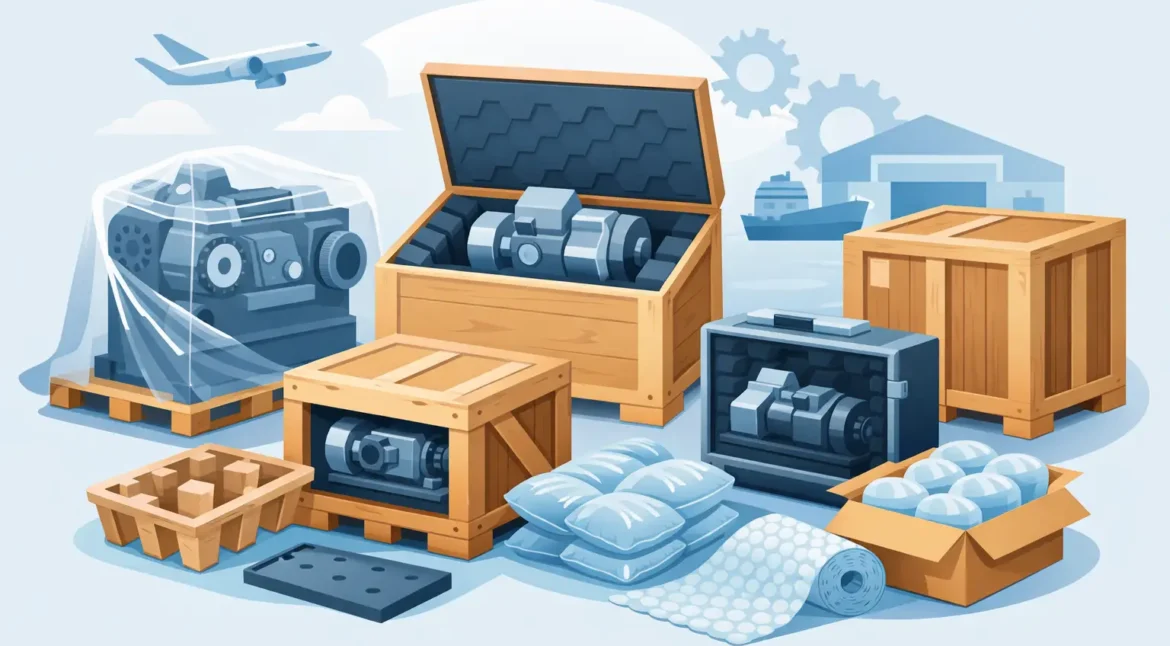
The most effective packaging system usually combines an outer container with internal protection. Corrugated cartons may be appropriate for smaller equipment and replacement parts. Heavy-duty corrugated, wood crating, foam, molded pulp, partitions, pads, stretch film, vapor barriers, and custom blocking can all play a role. The goal is not to use the most material. It is to use the right material in the right places.
A package that is oversized can drive up dimensional freight charges and allow damaging movement inside the container. A package built too tightly can transfer impact directly into fragile components. Good packaging engineering balances protection, pack-out speed, material use, storage requirements, and transportation cost.
Start With the Machinery, Not the Box
Packaging decisions should begin with a clear view of the product’s risk profile. Weight matters, but it is only one part of the equation. A lightweight machine with exposed fittings may require more careful protection than a heavier unit with a reinforced steel frame.
Look closely at the center of gravity, lifting points, protruding parts, surface finish, and sensitive electronics. Identify components that cannot tolerate compression, vibration, abrasion, or moisture. If the machine is mounted on a skid, determine whether the skid can safely support it during forklift handling, stacking, and transit.
Shipping conditions matter just as much. A local LTL shipment to a controlled facility calls for a different approach than an export shipment that may move through ports, warehouses, trailers, and changing temperatures for several weeks. Machinery that sits outdoors before installation needs stronger weather protection than equipment moving directly from one indoor facility to another.
Movement Is the Main Enemy
Most machinery damage starts when the product shifts. Blocking and bracing secure the load to a pallet, skid, or crate base so it cannot slide, tip, or rotate. Internal pads, foam, or custom-fit corrugated supports keep vulnerable pieces from contacting one another or the package walls.
For heavier equipment, the base is critical. The machine should be secured at designed mounting points whenever possible. Packaging should support the load without putting stress on panels, castings, controls, or other nonstructural areas. A strong outer crate does not compensate for poor internal restraint.
Vibration also deserves attention. Truck and rail movement can loosen fasteners, wear through protective film, and cause metal components to rub together. Cushioning materials should be selected for the machine’s weight and expected vibration exposure, not simply based on what is available on the packing line.
Match Materials to the Protection Requirement
Corrugated packaging remains a practical option for many machinery applications because it is adaptable, efficient to store, and available in a range of flute combinations and strengths. Heavy-duty corrugated cartons, die-cut inserts, pads, and partitions can create a repeatable packaging system for motors, pumps, assemblies, tools, and service parts.
Custom corrugated inserts are especially useful when a product needs location control without the cost or disposal burden of large foam components. They can protect edges, separate components, and create clearance around controls or fittings. For repeat shipments, a tested die-cut design also improves packing consistency across shifts and locations.
Foam is often the right choice for delicate electronics, calibrated instruments, painted surfaces, and parts that need higher shock absorption. However, foam adds material cost and can consume warehouse space. It should be designed around the actual item, rather than used as loose fill or a catch-all solution.
Wood crating or hybrid corrugated-and-wood solutions may be necessary for oversized, high-value, or export-bound machinery. Crates provide structural support, allow secure anchoring, and offer better protection from puncture and external impacts. The trade-off is added weight, labor, and freight expense. For some domestic shipments, a well-engineered palletized corrugated system can provide the needed protection at a lower total cost.
Do Not Treat Moisture Protection as an Add-On
Machinery can be damaged without a single visible impact. Condensation, humidity, salt air, and temperature swings can cause corrosion, electrical faults, stained finishes, and mold inside packaging. This is a frequent concern for export shipments, long-term storage, and equipment moving through humid regions.
The right moisture-control approach depends on the machine and the shipping lane. Protective films and bags can keep out dust and incidental moisture. Desiccants help manage humidity inside a sealed package. Vapor corrosion inhibitors may be appropriate for metal parts. Barrier materials and heat-sealed covers offer a higher level of protection for equipment exposed to extended transit or marine conditions.
These materials work only when the pack-out process is controlled. A barrier bag with gaps, a damaged seal, or wet wood inside a crate can defeat the purpose. Packaging specifications should state when and how moisture-control materials are applied, especially when different teams or facilities pack the same equipment.
Design for Handling and Freight, Not Just Transit
A package can protect the machine and still create operational problems. If it cannot be safely picked by a forklift, loaded efficiently, or opened without damaging the product, it adds cost and delay downstream.
Consider pallet footprints, fork entry, lift points, stackability, and label placement during design. A package that fits standard freight dimensions can help reduce wasted trailer space and avoid unnecessary accessorial charges. For less-than-truckload shipments, added protection at corners, edges, and base contact points is often worthwhile because freight is handled more frequently.
Pack-out time matters as well. A complex packaging design may perform well in a test environment but fail on the production floor if it requires too many steps, specialized tools, or hard-to-source materials. The best design is repeatable under real production conditions. Clear work instructions, labeled components, and practical fixture design can reduce variation and keep the line moving.
Test the Package Before It Becomes a Recurring Cost
A packaging failure is expensive because it repeats until someone changes the process. Before committing to a new design, review the shipping path and test for the hazards that matter most: drops, vibration, compression, incline impacts, and moisture exposure where applicable.
Testing does not always require an elaborate program. Start with the known causes of damage, carrier claim history, product returns, and feedback from receiving teams. If a machine arrives with worn corners, the package may need better edge protection. If it shifts on the pallet, focus on load restraint before adding more outer-wall strength.
Document the final specification, including material grades, dimensions, blocking locations, sealing method, labels, and photos of the finished pack. This gives procurement, production, and suppliers a common standard. It also makes it easier to identify changes when material substitutions or freight conditions affect performance.
Use Packaging Engineering to Reduce Total Cost
The lowest unit price is not always the lowest packaging cost. A cheaper carton that causes damage, requires extra labor, increases cube, or creates freight inefficiency can cost far more than a properly engineered alternative.
A packaging partner should look at the complete process: how materials arrive, where they are stored, how quickly they are assembled, how the product is secured, how loads move through freight, and what happens at the customer’s dock. TEC Business Solutions approaches packaging as part of that operating system, combining packaging options with sourcing, delivery coordination, warehousing support, and freight planning.
For many manufacturers, the strongest gains come from simplifying a fragmented process. Standardizing materials across product families can reduce inventory complexity. Right-sizing cartons and crating can lower freight spend. Just-in-time delivery can free warehouse space while helping the plant avoid packaging shortages that stop a line.
The right answer may be a heavy-duty corrugated design, a custom crate, protective foam, or a layered system using all of them. Start with the machine’s actual risks and the realities of its shipping lane, then build protection that prevents damage without creating a new cost problem.