
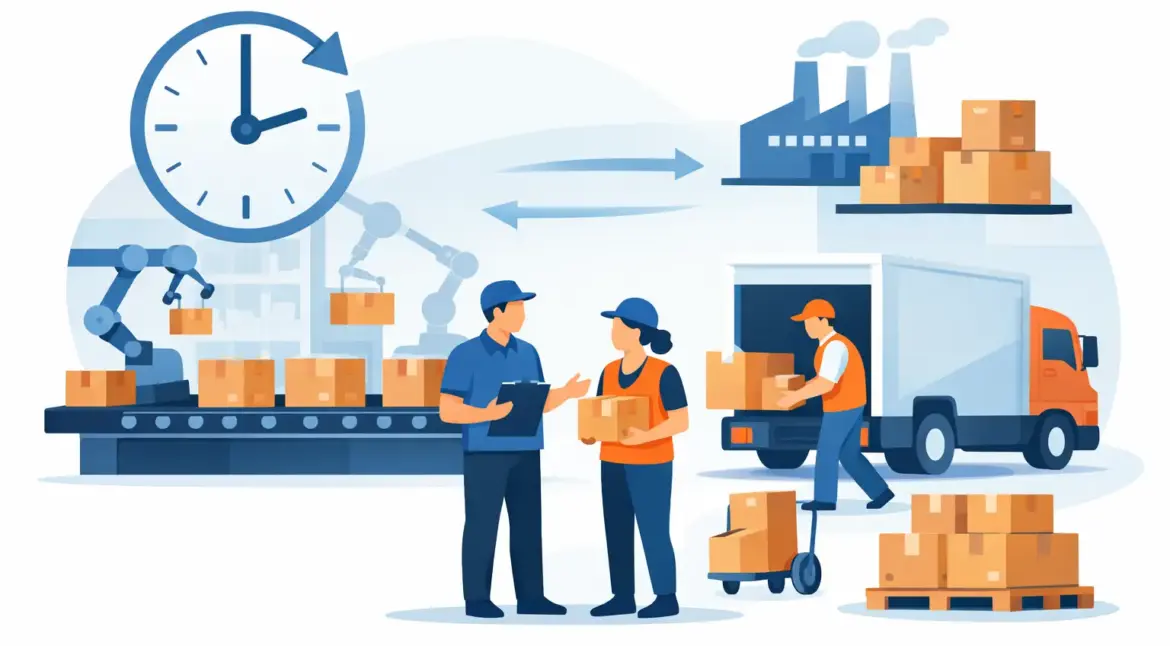
A production line can be ready to run, labor can be scheduled, and finished-product orders can be waiting – yet a shortage of the right carton, divider, or protective insert can stop everything. That is why operations teams ask, what is just in time packaging and whether it can reduce the risk and expense tied to packaging inventory.
Just-in-time packaging is a supply approach in which packaging materials arrive in the quantities and at the intervals needed to support production, rather than being purchased in large volumes and stored on-site for extended periods. The goal is not simply to buy fewer boxes. It is to keep packaging available when the plant needs it while lowering the total cost of inventory, storage, handling, and freight.
For manufacturers, food producers, and distributors, time is money. A well-run just-in-time program helps keep lines supplied without turning valuable floor space into a warehouse for cartons, pads, partitions, and corrugated sheets.
What Is Just in Time Packaging?
Just-in-time, often called JIT, is a planning and delivery model that aligns material supply with actual operating demand. In packaging, that may mean a supplier produces and delivers corrugated cartons weekly, protective packaging twice per month, or a mix of stock and custom packaging according to an agreed release schedule.
Instead of receiving a full truckload of packaging for a quarter of production, a business receives smaller, scheduled deliveries based on forecasts, production plans, order activity, and available storage space. The packaging supplier may hold inventory in its own warehouse, at a dedicated off-site location, or within a managed inventory program. Materials can also move through cross-docking operations to reduce unnecessary handling and storage time.
JIT packaging does not mean operating with no backup inventory. That is a common misunderstanding. A dependable program sets practical safety-stock levels for critical materials, considers supplier lead times, and accounts for seasonal demand or production variability. The right balance depends on how costly a stockout would be, how predictable demand is, and how quickly replacement packaging can be delivered.
Why Packaging Inventory Carries More Cost Than It Appears To
Packaging is often treated as a straightforward unit cost: the price of a box, bag, insert, or display. But large packaging inventories create expenses that do not always show up on a purchase order.
Bulky corrugated cartons consume warehouse space quickly. They require receiving, counting, moving, stacking, and protecting from moisture or damage. They can become obsolete when a product size changes, graphics are updated, a customer changes requirements, or a new packaging design is introduced. For businesses managing many SKUs, the risk grows with every variation in carton size, flute type, print requirement, or internal partition.
Buying in bulk may provide a lower per-unit price, but the lowest box price is not always the lowest total cost. If materials sit for months, require added warehouse labor, or force a facility to rent outside storage, the apparent savings can disappear. A just-in-time approach shifts the conversation from price per carton to the full cost of keeping production supplied.
How a Just-in-Time Packaging Program Works
A JIT program starts with a clear view of demand. The customer shares production forecasts, expected order volumes, seasonality, and current packaging usage. The supplier uses that information to establish replenishment quantities, delivery frequency, and inventory levels that fit the operation.
Forecasts Create the Starting Point
Forecasting does not need to be perfect to be useful. It provides the starting point for material planning. A plant that runs a consistent weekly schedule may need deliveries tied to regular production cycles. A business with promotional peaks, protein-processing volume swings, or customer-driven demand needs more flexibility.
The best programs include a process for updating forecasts and communicating changes quickly. If production is moving ahead of schedule, or a major customer order has been delayed, the packaging plan should change with it. Timely communication is what keeps JIT from becoming a rigid delivery calendar that no longer matches plant reality.
Inventory Is Positioned Where It Makes Sense
The supplier may warehouse packaging inventory so the customer does not have to. This is especially useful for high-volume corrugated boxes and specialized packaging that would otherwise occupy significant plant space. For some operations, a small amount of on-site inventory is still appropriate for fast-moving items or production-critical components.
The key is to position inventory deliberately. Materials should be close enough to support reliable replenishment but not so close that the manufacturer bears unnecessary storage and handling costs. Cross-docking can also help move packaging from inbound transportation to outbound delivery with limited time in storage.
Deliveries Follow Production Needs
JIT deliveries are scheduled around line consumption, receiving capacity, and available space. A manufacturer may receive materials on a set route each week, while another operation needs more frequent drops during peak production. Delivery timing matters as much as delivery quantity. Receiving too early can create congestion; receiving too late can interrupt production.
A capable provider coordinates packaging supply with freight planning rather than treating delivery as an afterthought. This can help reduce expedited shipments, improve truck utilization, and give operations teams more confidence in the materials plan.
Packaging Design Still Matters in a JIT Model
Just-in-time delivery cannot compensate for packaging that is poorly designed for the product or the production line. Cartons that do not run efficiently, partitions that slow packing, or inadequate protection that creates damage claims will add cost regardless of how often they are delivered.
Package engineering should be part of the conversation. The right corrugated flute can balance strength and material use. A die-cut box may improve packing speed or presentation. Right-sizing a carton can reduce void fill and help lower freight costs by improving pallet density. For food and bakery operations, packaging must also support product protection, handling requirements, and the pace of the line.
A supplier that understands both packaging and logistics can identify opportunities beyond simple replenishment. Sometimes the best JIT result comes from reducing the number of packaging SKUs, standardizing common sizes, or redesigning a carton so more units fit on a pallet. These changes can lower inventory complexity while improving transportation efficiency.
The Operational Benefits of Just-in-Time Packaging
When the program is planned and managed well, JIT packaging can improve several parts of the operation at once. It reduces the amount of capital tied up in material that will not be used immediately. It frees warehouse and plant floor space for raw materials, finished goods, or production activities. It can also reduce internal handling, inventory counts, damage from long-term storage, and obsolescence from outdated packaging.
The most meaningful benefit is production continuity. Procurement and plant teams gain a defined replenishment process instead of reacting to emergency shortages. That matters when packaging is essential to shipping finished goods, meeting customer requirements, and keeping lines moving.
There is also a vendor-management advantage. Working with an integrated packaging and freight partner can consolidate sourcing, design support, warehousing, delivery coordination, and transportation management. TEC Business Solutions approaches packaging as an operational requirement connected to production and delivery, not as a box-only purchase.
Where JIT Packaging Requires Extra Planning
JIT is not the right answer in every situation. It depends on dependable supply, clear communication, and realistic lead times. If a custom carton requires a long production cycle, carries highly specialized graphics, or is sourced from a distant facility, the program may need larger safety-stock levels or earlier release decisions.
Demand volatility is another consideration. Businesses with unpredictable orders can still use JIT, but their agreements should allow for adjustments, defined surge capacity, and a process for handling urgent needs. Seasonal manufacturers may build inventory ahead of a known peak, then use scheduled releases to avoid filling their own warehouse.
Transportation reliability matters as well. A delivery plan that works on paper can fail if carrier capacity, route planning, or receiving windows are not managed closely. That is why packaging supply and freight coordination should be aligned. The packaging is only useful if it arrives in usable condition, at the required location, before the line needs it.
Is Your Operation Ready for Just-in-Time Packaging?
A practical evaluation begins with four questions:
- How much space, labor, and working capital are currently tied up in packaging inventory?
- Which cartons, inserts, pads, or protective materials are most critical to production continuity?
- How predictable are production schedules and customer demand?
- Can your supplier provide warehousing, responsive communication, and dependable delivery capacity?
The answers will help determine whether a full JIT program, a hybrid model, or a simpler scheduled-delivery arrangement is the best fit. High-volume, predictable packaging items are often the easiest place to start. From there, an operation can expand the program as forecast accuracy and supplier coordination improve.
The practical goal is not to keep the least possible packaging on hand. It is to keep the right packaging available with the least possible disruption, storage burden, and total cost. When supply, package design, warehousing, and freight move in the same direction, packaging becomes one less variable standing between a production schedule and a completed shipment.