
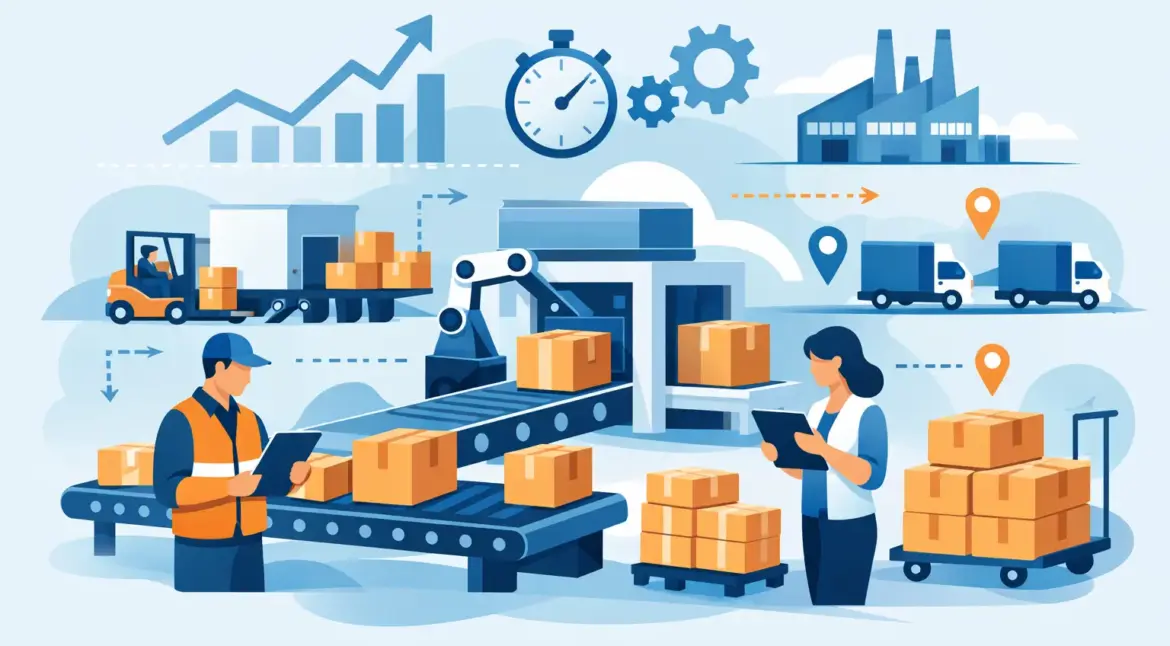
A packaging line can look busy and still be inefficient. Operators may be waiting on cartons, filling oversized boxes with void fill, stopping to correct poor fits, or working around damaged loads that return from the field. Those issues add labor, material, freight, and customer-service costs long before they appear on a monthly report. Knowing how to improve packaging efficiency starts with treating packaging as part of the production and delivery system, not as a commodity purchase.
For manufacturers, food producers, distributors, and industrial operations, the goal is not simply to use fewer boxes. The goal is to move a protected product through packing, storage, transportation, and delivery with the lowest total operating cost. That takes the right design, dependable supply, and a process that matches the realities of the plant floor.
Start With the Cost Behind the Box
Unit price matters, but it is only one part of packaging cost. A lower-cost carton can become the expensive choice if it slows packing, requires more tape or filler, consumes excess warehouse space, or fails under stacking pressure. The same is true when a box is technically adequate but poorly sized for the product or the shipping method.
Begin by mapping the full path for a representative product line. Measure how long it takes to assemble the package, load the product, apply protective materials, seal it, label it, and stage it for shipment. Then look at what happens after it leaves the plant: damage claims, rejected deliveries, freight charges, storage requirements, and inventory shortages.
This assessment often reveals that the greatest losses are not dramatic. They are repeated seconds at the packing station, a few inches of unused cube in every shipment, or a line shutdown caused by a late carton delivery. Time is money, especially when the same issue touches thousands of units each week.
How to Improve Packaging Efficiency Through Better Design
The right package design supports speed and protection at the same time. It should be easy for operators to form and pack, strong enough for its distribution environment, and sized to minimize material use and freight cube. Those requirements sometimes compete, which is why packaging changes should be evaluated across the entire operation.
Right-size cartons for the product and shipping method
Oversized cartons are one of the most common sources of waste. They require more corrugated material, take up more room in storage, and often need extra cushioning. Larger packages also increase dimensional weight charges for many parcel shipments.
Right-sizing does not mean choosing the smallest possible box. It means selecting dimensions that hold the product securely with appropriate clearance for inserts, pads, partitions, or protective packaging. A product moving by parcel carrier may need a different solution than the same product moving on a palletized LTL shipment. Fragile products, heavy parts, food items, and irregular shapes each have their own handling risks.
A packaging engineer can review product dimensions, weight, stacking requirements, moisture exposure, and shipping lanes to identify where box size or construction can be adjusted. Often, a modest change to a die-cut design, flap configuration, or corrugated flute creates a faster pack-out without sacrificing performance.
Match board strength to actual conditions
Over-specifying corrugated board increases material cost. Under-specifying it creates crushed cartons, damaged product, and unhappy customers. The efficient choice is the level of strength needed for the actual distribution cycle.
Consider the product weight, number of pallet layers, warehouse dwell time, humidity, handling frequency, and whether loads are stretch wrapped or unitized. A meat box exposed to cold-chain conditions has different requirements from a bakery box, a legal file storage carton, or an industrial replacement-part package. Board grade and flute selection should reflect those conditions rather than rely on a one-size-fits-all standard.
Reduce touches at the packing station
Every extra component adds handling time and creates another opportunity for error. If an operator must assemble a carton, add several loose inserts, apply multiple strips of tape, and search for the correct label, the process is carrying avoidable cost.
Look for designs that combine functions. A die-cut insert may replace several pieces of loose dunnage. A self-locking carton may reduce taping for the right application. Custom partitions can protect multiple products while making pack orientation obvious. The best option depends on line speed, labor availability, product sensitivity, and equipment. A more sophisticated package is not efficient if it is difficult to load consistently.
Build Packaging Supply Around Production Demand
A well-designed box has little value if it is unavailable when production needs it. Excess inventory creates its own cost through storage space, material handling, damage, and obsolete stock. Too little inventory risks costly line interruptions and expedited freight.
The practical answer is demand-based replenishment. Review production schedules, seasonal volume swings, minimum order quantities, lead times, and storage capacity. Set reorder points based on actual usage and the risk associated with a stockout, not just historical purchasing habits.
Just-in-time delivery can reduce material overhead for frequently used cartons and protective packaging, particularly when a supplier can maintain local inventory or stage product near the facility. Cross-docking can also help companies move packaging or finished goods through a location without carrying unnecessary inventory. However, lean inventory only works when delivery performance is dependable. If demand is volatile or a package is highly specialized, a planned safety stock may still be the sound business decision.
Packaging standardization helps here as well. Consolidating similar carton sizes, pad formats, or partition designs can simplify purchasing and reduce SKU complexity. Standardization should not force a poor fit for the product, but it can eliminate unnecessary variation across product lines.
Treat Freight and Packaging as One Decision
Packaging and transportation are often managed separately, even though each directly affects the other. A carton that fits more units per pallet can reduce trips, improve trailer utilization, and lower handling exposure. A design that prevents load shift can reduce damage and rework at the destination.
Review pallet patterns, case dimensions, stack height, and trailer cube before approving a packaging change. Small adjustments in length, width, or height can create a more efficient pallet footprint. In some cases, a slightly stronger carton allows higher stacking and improves freight efficiency. In others, a lighter design lowers material cost without changing pallet performance.
Freight mode also matters. Parcel shipments are especially sensitive to dimensional weight and automated handling. LTL loads require attention to pallet stability and terminal handling. Full truckload shipments may offer more flexibility, but poor cube utilization still leaves money on the table. Coordinating package engineering with freight management gives operations teams a clearer view of the total cost per delivered unit.
Measure the Results on the Plant Floor
Packaging efficiency improves when teams measure outcomes, test changes, and keep what works. Avoid judging a redesign only by carton price. Track a group of operating metrics that shows whether the package is helping or hurting the system:
- Packaging material cost per finished unit
- Labor time per packed unit
- Line stoppages caused by packaging shortages or defects
- Damage, returns, and customer complaints
- Units per pallet, trailer, or shipment
- Warehouse space used by packaging inventory
Use a controlled trial when possible. Run the new package on a defined product line, observe operator behavior, record pack times, and inspect finished loads after shipment. Ask the people working at the station where the process creates friction. Their feedback can expose problems that drawings and specifications do not show.
It also helps to establish clear ownership. Procurement may manage pricing, operations may manage line performance, quality may review protection, and logistics may monitor transportation. Each group sees a different part of the cost. A cross-functional review prevents one department from achieving a local savings that creates a larger expense somewhere else.
Choose a Partner That Can Solve More Than Supply
When packaging, inventory, and freight are handled by separate vendors, responsibility can become fragmented. One supplier may provide cartons, another may store inventory, and a third may manage transportation, leaving internal teams to coordinate every change and resolve every exception.
A full-service packaging partner can bring those decisions together. TEC Business Solutions supports customers with packaging design, sourcing, warehousing, just-in-time delivery, manufacturing support, and freight coordination. That combination helps operations teams evaluate the complete cost of a package, not just the invoice for corrugated.
The most useful packaging improvements are rarely one-time projects. They come from regularly questioning whether each carton, insert, pallet pattern, and delivery schedule still fits the way your operation runs. Start with the packaging process creating the most friction, make one measurable change, and let the results guide the next decision.