
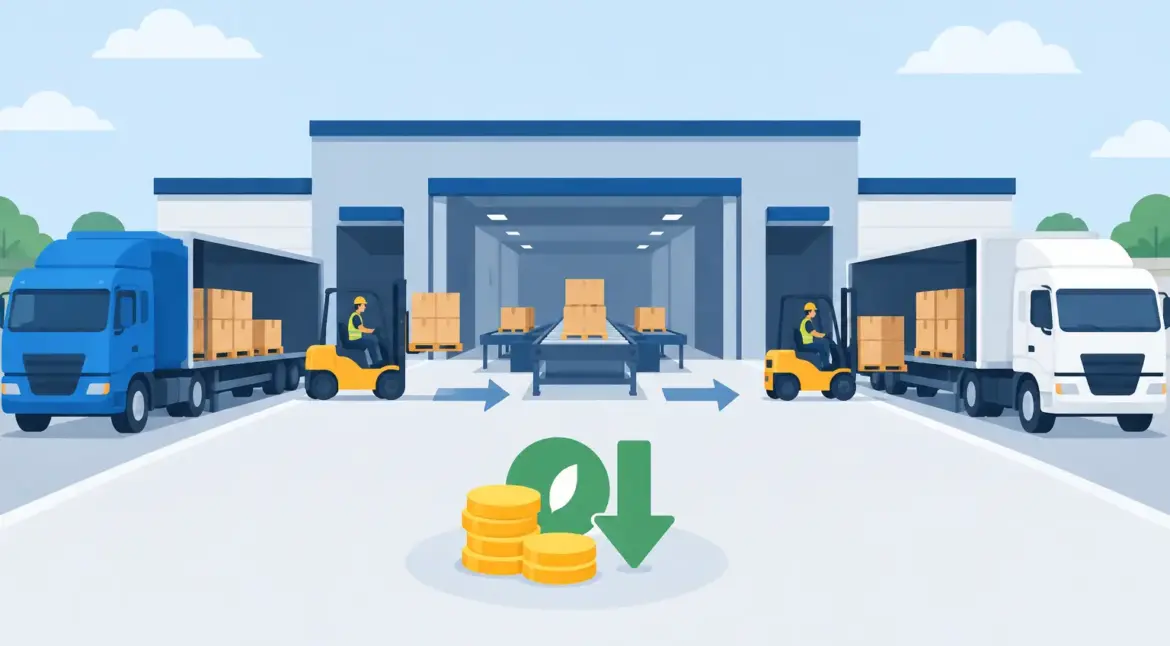
A truck waiting on a dock door costs money. So does a production line waiting on packaging, a shipment that gets handled twice, or a customer order that misses its delivery window. Cross docking can reduce those costs, but only when the operation is built around accurate information, disciplined scheduling, and clear accountability. The best practices for cross docking are less about moving freight faster at any cost and more about removing avoidable touches without losing control of product, quality, or service.
For manufacturers, food producers, distributors, and industrial businesses, cross docking can turn a warehouse from a storage expense into a coordinated transfer point. Incoming materials move from receiving to outbound transportation with little or no long-term storage. That can reduce inventory carrying costs, improve trailer utilization, and help operations respond to changing demand. The trade-off is that cross docking leaves less room for error. A late inbound load, poor labeling, or an unplanned order change can disrupt the entire schedule.
Start With the Right Freight and Product Profile
Cross docking is not the best answer for every product or every lane. It performs best when inbound supply, outbound demand, product specifications, and transportation schedules are reasonably predictable. High-volume, fast-moving products are often strong candidates because they can move through the facility quickly and consistently.
Standardized packaging also matters. Cartons, pallets, partitions, and protective materials should support fast identification, safe handling, and stable loading. If a product arrives with inconsistent labeling, damaged corners, weak pallets, or mixed configurations that require sorting, the labor savings from cross docking can disappear quickly.
Before changing the flow, review the products and lanes that create the most handling, storage, and freight cost. Identify which shipments have dependable volumes, repeat destinations, compatible delivery windows, and low inspection requirements. Then begin with a controlled group of suppliers, customers, or stock keeping units rather than routing every inbound load through the new process.
Build the Schedule Before the Freight Arrives
A cross-dock facility runs on timing. Receiving, staging, picking, loading, and carrier dispatch must work from the same plan. If the inbound team does not know what is arriving, where it belongs, and which outbound trailer needs it, freight will sit on the floor just like conventional warehouse inventory.
Use advance shipment notices, purchase order data, appointment schedules, and customer order information to create a working dock plan before each shift. The plan should answer practical questions: Which door will receive the load? Is the freight moving directly to an outbound trailer or a short-term staging lane? Does it require count verification, temperature review, quality inspection, or repacking? What is the latest load-ready time for the outbound carrier?
Carrier appointments should be realistic, not aspirational. An aggressive schedule may look efficient on paper but becomes expensive when trucks stack up, dock teams rush, and loading errors increase. Build enough buffer for normal variation, especially for weather-sensitive lanes, live unloads, or suppliers with inconsistent arrival performance. The right buffer depends on the product and service commitment. Food-grade or time-sensitive freight may require tighter controls than durable industrial components, while a stable recurring route can operate with a smaller margin.
Assign Dock Doors by Flow, Not Convenience
Door assignments should support the physical movement of freight. Place inbound and outbound trailers with related freight flows as close together as possible. Reduce forklift travel, avoid crossing traffic paths, and reserve staging space for loads that cannot move immediately.
A simple door map can prevent a surprising amount of wasted motion. It should account for trailer type, pallet count, equipment needs, temperature requirements, and outbound departure time. Revisit the map as volumes and customer requirements change. A layout that worked during a low-volume period may create bottlenecks when production ramps up.
Make Every Unit Easy to Identify and Handle
Fast movement depends on clear identification. Every pallet, carton, tote, or bundle should connect to an inbound shipment, a destination, and a handling instruction. Barcodes, scannable pallet labels, color-coded destination markers, and clear shipment documentation help dock teams confirm where freight belongs without relying on memory or verbal instructions.
Packaging has a direct role in cross-dock performance. Cartons need to withstand repeated movement, pallet loads need to remain stable, and labels need to stay visible from receiving through final delivery. A low-cost box that crushes during transfer can create claims, rework, delayed departures, and customer dissatisfaction that cost far more than the initial material savings.
Package engineering should consider how products move through the full supply chain, not just how they leave the plant. The best design may use a different corrugated flute, stronger corners, partitions, pads, or a revised pallet pattern to reduce damage and speed handling. For businesses shipping mixed products, packaging that supports consistent dimensions and efficient cube utilization can improve both dock flow and freight cost.
Set Clear Rules for Staging and Exceptions
The goal of cross docking is not to eliminate all staging. It is to make staging purposeful, visible, and short. Designate lanes by destination, route, customer, or departure wave. Mark them clearly and set maximum dwell times so temporary freight does not become forgotten inventory.
The operation also needs an exception process. Not every load will match the plan. Freight may arrive damaged, short, early, late, mislabeled, or assigned to an outbound trailer that has already closed. Without a defined exception area and decision process, these problems spill into active staging lanes and slow every other load.
Give supervisors the authority to make quick decisions on common exceptions. They should know when to hold freight, when to redirect it, when to request a quality review, and when to arrange alternate transportation. Escalate only the exceptions that require customer approval, inventory changes, or material disposition. Time is money, and a dock team should not wait for multiple approvals to resolve a routine issue.
Measure the Best Practices for Cross Docking
Cross docking should be managed with operational measures that reveal whether speed is improving service or simply shifting problems downstream. Start with a small scorecard that leaders can review by shift, lane, supplier, and carrier.
Track these five controls consistently:
- Dock-to-stock or dock-to-trailer time, including how long freight spends in staging.
- On-time inbound arrivals and on-time outbound departures.
- Touches per unit, labor hours per pallet, and forklift travel where available.
- Damage, shortage, and misroute rates by supplier, product type, and carrier.
- Trailer cube utilization and freight cost per shipment or delivered unit.
Numbers should lead to action. If dwell time rises, determine whether the cause is late arrivals, insufficient doors, missing documentation, labor coverage, or outbound capacity. If damage increases, inspect packaging strength, pallet quality, handling practices, and trailer loading methods. A metric without an assigned owner and a follow-up process is only a report.
Coordinate Packaging, Warehousing, and Freight Decisions
Cross docking works best when packaging and transportation decisions are made together. A freight manager may want denser trailer loads, while a plant team may need packaging that protects a sensitive product or feeds an automated line efficiently. Those requirements are not always in conflict, but they must be evaluated together.
For example, reducing carton size may improve trailer cube, but it can also increase pack-out time or reduce compression strength. Switching to a different pallet configuration may create more loading flexibility but complicate customer receiving. The right choice depends on total operating cost: material, labor, damage, storage, freight, and service performance.
This is where an integrated partner can make a practical difference. TEC Business Solutions helps customers connect packaging design, just-in-time delivery, warehousing, cross-docking, and freight coordination so a change in one part of the operation does not create an avoidable cost somewhere else.
Train for Consistency, Then Improve by Shift
The most effective cross-dock processes are simple enough for teams to execute consistently during a busy shift. Document the workflow from arrival through departure, including scanning requirements, inspection points, staging rules, loading sequence, and exception handling. Train employees on why each step matters, not just which task to complete.
Cross-train team members where possible. Coverage gaps at receiving, quality review, or outbound loading can stop flow even when other labor is available. At the same time, do not confuse cross-training with assigning everyone to everything. Clear roles keep handoffs accountable and prevent missed steps.
Review performance at the end of each shift while details are still fresh. Ask where freight waited, what information was missing, which loads required extra handling, and whether any packaging or carrier issue created delay. Small corrections made daily are usually less costly than a major redesign after service levels have declined.
A well-run cross dock is not defined by how little inventory it holds. It is defined by how reliably it turns incoming freight into accurate, protected, on-time outbound shipments. Start with the lanes you can control, build the discipline to manage exceptions, and let proven performance guide the next expansion.