
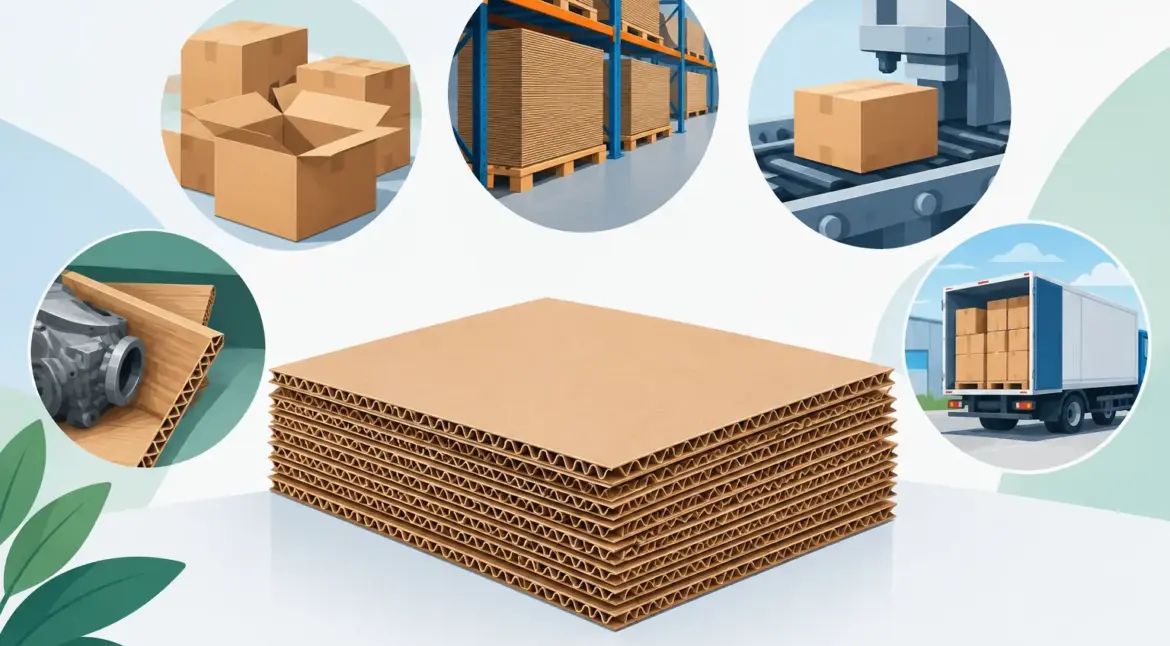
A pallet can leave the dock looking secure and still arrive with scuffed product, crushed corners, or unstable layers. In many operations, the fix is not a heavier box or more stretch wrap. It is a properly specified corrugated sheet in the right place. The top uses corrugated sheets extend well beyond simple layering. They support product protection, cleaner production flow, better pallet performance, and lower avoidable costs across the supply chain.
Corrugated sheets are flat, durable pieces of corrugated board available in a range of flute profiles, strengths, dimensions, and coatings. That flexibility makes them useful wherever a product needs separation, cushioning, surface protection, or added stability. The best application depends on product weight, moisture exposure, handling methods, stacking height, and shipping distance.
Top Uses for Corrugated Sheets on the Plant Floor
Pallet layer pads and load stabilization
One of the most common uses for corrugated sheets is as a layer pad between rows of products on a pallet. The sheet creates a flat, even surface that helps prevent cartons, pails, trays, or bagged goods from shifting into gaps below. It also distributes weight more evenly, which matters when products are stacked several layers high or handled repeatedly by forklifts.
Layer pads can improve pallet stability without adding bulky packaging components. For operations shipping mixed loads or products with irregular outer dimensions, a properly sized pad reduces movement that stretch wrap alone may not control. Top sheets also protect the upper layer from dust, fork contact, and compression caused by stacked pallets.
The trade-off is simple: a sheet that is too light may buckle under load, while an overly heavy specification adds material cost and can slow manual handling. Package engineering should account for the total pallet pattern, not just the weight of a single case.
Interleaving fragile or finished products
Finished surfaces are easily damaged when product layers rub together in transit. Corrugated sheets create separation between parts, panels, glass, metal components, printed materials, and finished goods that cannot tolerate scuffs or pressure marks. Unlike loose-fill materials, sheets stay in position and can be placed quickly during packing or palletizing.
For manufacturers, this can be a practical way to reduce rework and customer complaints without redesigning the entire shipping pack. A sheet may also be die-cut, scored, or paired with partitions when more precise positioning is needed. The right solution depends on whether the main risk is abrasion, impact, edge damage, or product-to-product contact.
Work-in-process protection
Production does not stop being vulnerable once a component leaves one machine. Work-in-process inventory may wait on carts, racks, pallets, or staging areas before moving to the next step. Corrugated sheets protect parts between operations, especially when painted, coated, machined, polished, or otherwise finished surfaces are exposed.
Using sheets at transfer points also helps create a cleaner, more organized handling routine. Operators know where to place protection, supervisors can standardize material usage, and products are less likely to be set directly on hard or dirty surfaces. Time is money on the production floor. A simple protective layer can prevent delays created by inspection, touch-up work, or replacement parts.
Corrugated Sheets for Shipping and Warehousing
Unitizing cartons and retail-ready packs
Cartons do not always behave like a single load, particularly when they have slick surfaces, variable heights, or limited stacking strength. Corrugated sheets placed between layers increase friction and provide a more level platform. This helps unitize the load before stretch wrapping and reduces the chance of carton edges digging into products below.
For retail-ready trays and display components, sheets can protect printed graphics and prevent crushing during distribution. They are also useful when shipping promotional materials, point-of-purchase displays, or seasonal inventory that must arrive clean and ready for setup. In these cases, protection is not just about reducing damage claims. It protects presentation quality at the point of sale.
Bottom pads for pallet protection
A bottom pad separates product cartons from the pallet deck. This is valuable when rough pallet boards, protruding nails, moisture, or forklift handling could compromise the lowest layer. A bottom sheet can also bridge minor gaps in the pallet surface and help distribute load pressure across cartons.
Food producers and cold-chain shippers may need additional consideration. Standard corrugated material can lose strength when exposed to moisture, condensation, or wet environments. Moisture-resistant or wax-alternative coated options may be a better fit where conditions demand it. The goal is not simply to add a pad, but to maintain package performance through the actual shipping environment.
Slip sheets for material handling efficiency
In certain high-volume operations, corrugated slip sheets can replace or supplement pallets. Used with push-pull forklift attachments, they allow loads to be moved with less wood and less pallet storage. This can reduce inbound and outbound freight weight, recover floor space, and simplify some export shipments.
Slip sheets are not right for every facility. They require compatible equipment, trained operators, and load designs that can withstand the handling method. A pallet may remain the better choice for companies moving mixed loads, using conventional forklift fleets, or shipping through networks where receivers cannot handle slip-sheeted freight. Still, for predictable, high-throughput lanes, the savings can be meaningful.
Protective sheets for warehouse storage
Warehouse damage often occurs before a shipment is ever picked. Corrugated sheets can cover stored inventory, separate stacked bundles, and protect products from dust or contact with shelving and dunnage. They are especially useful for flat-packed goods, printed materials, sheet products, and components held in reserve inventory.
This application supports inventory quality as well as housekeeping. When materials remain clean and protected in storage, teams spend less time sorting, wiping, repacking, or writing off damaged stock. For long storage cycles, it is worth confirming whether the board grade will retain sufficient performance under the expected temperature and humidity conditions.
Selecting the Right Corrugated Sheet
Not all corrugated sheets deliver the same result. Flute selection affects cushioning, stiffness, printability, and thickness. Lightweight sheets may work well for interleaving small products, while heavier double-wall sheets may be needed for load-bearing layer pads or demanding industrial applications. Size matters just as much. A sheet that extends too far beyond a load can catch during handling, while one that is too small leaves vulnerable areas exposed.
The operating environment should guide material selection. Food and beverage operations may prioritize moisture resistance and sanitation requirements. Manufacturers of finished components may need cleaner surfaces or custom die cuts. Distribution centers may focus on fast, repeatable placement that keeps labor moving. Freight distance, trailer conditions, stacking practices, and receiver requirements all influence the final specification.
This is where a packaging partner adds value beyond supplying board. TEC Business Solutions can assess how a corrugated sheet works with your cartons, pallet configuration, warehouse process, and freight plan. The objective is to avoid buying excess material while ensuring the load is protected where failures actually occur.
Where Cost Savings Usually Come From
The purchase price of a corrugated sheet is only one part of the equation. A lower-cost sheet that fails during transit can lead to damaged inventory, repacking labor, customer credits, production disruption, and expedited replacement shipments. On the other hand, overspecifying every load creates unnecessary material expense and may increase freight costs through added weight and cube.
The strongest savings usually come from matching the sheet to the job. Standardizing sizes where possible can simplify purchasing and storage. Designing sheets around consistent pallet footprints can speed packing. Coordinating deliveries with production schedules can reduce the need to carry excessive packaging inventory on-site. These are operational improvements, not just packaging changes.
Corrugated sheets are simple by design, but their impact can be substantial when they are selected with the full supply chain in mind. Start with the damage points, handling steps, and freight conditions your product faces every day. The right sheet should make the work easier, keep product moving, and give your team one less reason to stop the line.