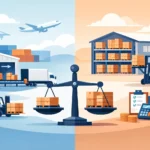

A late truck does more than miss a dock appointment. It can idle a line, strain customer relationships, increase overtime, and force your team into expensive last-minute decisions. That is why a freight management for manufacturers guide should start with one reality: transportation is not a back-end task. It affects production flow, inventory levels, labor planning, packaging performance, and total operating cost.
Manufacturers feel this pressure every day. Raw materials need to arrive when scheduled. Finished goods need to move without damage or delay. Procurement is watching spend, operations is protecting throughput, and customers expect consistency. Freight management works best when it is treated as part of plant performance, not a separate function sitting outside the rest of the business.
What freight management means in a manufacturing environment
For manufacturers, freight management is the coordination of inbound and outbound transportation in a way that supports production and controls cost. That includes carrier selection, routing, shipment scheduling, load planning, rate management, freight claims, tracking, and communication across suppliers, plants, warehouses, and customers.
The manufacturing piece changes the equation. A distributor may have more flexibility to absorb a late shipment. A plant often does not. If a component misses its delivery window, production can stall. If finished goods are packed poorly or loaded inefficiently, damage claims and rework follow. Freight decisions are tied directly to uptime, labor efficiency, and customer service.
This is also where many companies leave money on the table. They negotiate packaging with one supplier, arrange storage with another, and manage transportation through a separate provider. That separation can hide the real source of cost. The issue may not be freight rates alone. It may be packaging design, order timing, load configuration, or poor coordination between departments.
A freight management for manufacturers guide should start with total cost
Freight cost matters, but the lowest rate is not always the lowest operating cost. A cheaper carrier that misses appointments or generates recurring damage can become the expensive option very quickly. The same applies to order patterns. Sending smaller loads too often may improve inventory position in one area while increasing transportation cost and administrative work in another.
A better approach is to evaluate total landed and operating cost. That means asking broader questions. Are shipments being planned around production reality, or around habit? Is packaging designed to protect the product and optimize cube? Are truckloads being maximized where it makes sense? Are rush shipments happening because planning is weak, or because supplier coordination is inconsistent?
This is where experienced manufacturers separate activity from strategy. They do not just move freight. They build a system that supports plant performance.
Where freight problems usually begin
Most freight issues are symptoms of upstream gaps. One common problem is poor forecast alignment. If production schedules shift but transportation plans do not, carriers get bad information, lead times shrink, and premium freight becomes more likely.
Another issue is fragmented communication. Purchasing may place orders without full visibility into warehouse capacity or receiving schedules. Operations may change run priorities without notifying transportation teams early enough to adjust pickups. Sales may promise delivery dates that create avoidable pressure on shipping.
Packaging also plays a bigger role than many teams expect. If the package is oversized, unstable, or inconsistent, freight efficiency drops. Trailers fit less product. Damage risk goes up. Handling time increases. What looks like a packaging decision becomes a freight cost problem.
Build the right carrier mix
A strong carrier strategy balances price, service, capacity, and flexibility. For most manufacturers, that means avoiding dependence on a single option unless volumes and lanes make that structure truly reliable. Carrier diversification matters, especially when market conditions tighten or seasonal demand spikes.
That does not mean adding complexity for its own sake. Too many carriers can create inconsistency, weak accountability, and more time spent managing exceptions. The goal is a practical mix of core providers that understand your lanes, your shipping patterns, your product requirements, and your service expectations.
It also helps to separate freight by need. High-volume, predictable lanes may fit dedicated or contracted arrangements. Irregular moves may require a more flexible brokerage approach. Time-sensitive shipments may need specialized handling. It depends on the freight profile, not on a one-size-fits-all model.
Packaging and freight should work together
This is one of the most overlooked opportunities in manufacturing. Packaging is often discussed in terms of material cost only, but freight performance is affected by carton strength, dimensions, pallet patterns, stackability, and protection levels.
A box that costs a few cents less may increase damage rates or reduce trailer utilization. A better-engineered package may improve cube, reduce product loss, and lower transportation cost across every shipment. For food producers and industrial manufacturers alike, the right packaging can support speed on the line and stability in transit at the same time.
That is why freight management should not sit in isolation. When packaging design, warehousing, and transportation are aligned, manufacturers get more than rate savings. They reduce touchpoints, prevent rework, and create more predictable shipping performance.
Visibility matters, but response matters more
Tracking tools are useful, but visibility alone does not solve freight problems. Many companies can see that a shipment is delayed. Fewer have a process to act fast enough to prevent a line disruption or customer issue.
Effective freight management combines data with accountability. That means clear escalation paths, proactive carrier communication, realistic lead times, and people who understand what is at stake when a load moves late. In manufacturing, speed of response is often just as important as speed of transit.
This is one reason many companies prefer working with a hands-on partner rather than treating freight as a pure transactional service. When a shipment is at risk, they need support that is immediate and practical, not just a system update.
Use warehousing and cross-docking strategically
Freight performance is not only about what happens on the road. It is also shaped by where inventory sits and how product flows through the network. Warehousing and cross-docking can help manufacturers reduce storage pressure, support just-in-time delivery, and improve shipment timing.
For example, staged inventory near a production facility can reduce the risk of downtime for critical packaging or components. Cross-docking can speed movement without long-term storage costs. The right setup depends on product velocity, space constraints, and service requirements.
If your current freight model assumes every shipment must move directly from supplier to plant or from plant to customer, you may be missing a more efficient structure.
Metrics that actually help manufacturers
Freight reporting should go beyond rate per mile or total monthly spend. Those numbers matter, but they do not tell the full story. Manufacturers need metrics tied to operating outcomes.
On-time pickup and on-time delivery are essential, but they should be measured against the appointment standards that matter to the plant or customer. Damage rate is another key metric, especially when tied back to packaging and handling methods. Premium freight frequency is worth watching because it often reveals planning failures or recurring supplier issues.
Carrier performance by lane is more useful than broad averages. So is freight cost by unit shipped, by product family, or by customer type. The more closely the data connects to real operating decisions, the more value it provides.
When to consider outside freight support
Some manufacturers have the internal team and shipment volume to manage freight successfully in-house. Others do better with outside support, especially when transportation is pulling time away from production, purchasing, or customer service teams.
A good partner helps simplify the operation, not complicate it. That means managing carrier relationships, coordinating shipments, solving service issues quickly, and looking for cost improvements across packaging, warehousing, and freight together. For companies trying to reduce vendor sprawl, this integrated model can be especially valuable.
That is where a provider like TEC Business Solutions fits naturally. When packaging supply, inventory support, and freight coordination are managed with the same operational mindset, manufacturers gain better control over both cost and execution.
A practical way to improve freight management now
Start by reviewing your last sixty to ninety days of exceptions. Look at late deliveries, damaged shipments, expedited moves, and repeated accessorial charges. Then trace those issues back to the source. Some will be carrier-related. Others will come from packaging design, order timing, warehouse constraints, or poor communication between teams.
Next, review your top lanes and top shipping profiles. The best savings opportunities are usually concentrated, not spread evenly across every move. Then compare your freight plan with how your plant actually operates. If transportation decisions are fighting production reality, no rate sheet will fix the problem.
Freight management improves when it becomes part of the operating plan. Not a cleanup task. Not a scramble when something goes wrong. A working system that protects output, controls cost, and keeps commitments moving.
Time is money, especially on the plant floor. The manufacturers that treat freight with the same discipline they bring to production usually find the same result follows – fewer surprises, better performance, and more room to grow without adding unnecessary complexity.