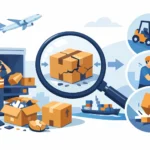

A packaging decision can look inexpensive on a unit-price spreadsheet and still cost your operation far more than expected. Stock boxes vs custom packaging is not simply a question of buying what is available versus ordering what is branded. It is a decision that affects line speed, product damage, warehouse space, freight costs, customer experience, and the number of suppliers your team has to manage.
For manufacturers, food producers, and distributors, the right answer depends on the product, the shipping environment, order volume, and how much inefficiency the current package creates. Time is money. A box that slows packing, requires excessive filler, or arrives inconsistently can quickly erase any savings from a low purchase price.
What Stock Boxes Do Well
Stock boxes are standard-size cartons produced for broad use. They are typically available in common lengths, widths, heights, board grades, and styles, including regular slotted cartons, mailers, pads, partitions, and protective materials. Because they are produced in volume and held in inventory, they generally offer short lead times and lower initial purchase costs.
For a business with changing product dimensions, limited order quantities, or an immediate packaging need, stock boxes can be a practical answer. They are especially useful for replacement shipments, pilot runs, seasonal demand spikes, maintenance supplies, or products that fit standard dimensions without much unused space.
Stock packaging also reduces commitment. There is usually no need to invest in printing plates, cutting dies, or a large minimum order before testing a new product or entering a new market. If the product changes next quarter, the operation is not left with a warehouse full of obsolete printed cartons.
That flexibility has real value. It is often the right choice when demand is unpredictable or packaging requirements have not yet stabilized.
Where Stock Boxes Can Create Hidden Costs
A standard box is designed to serve many products, not necessarily yours. When a carton is too large, workers often compensate with void fill, foam, paper, or additional inserts. The product may still shift in transit, leading to crushed corners, cosmetic damage, returns, or customer complaints.
Oversized cartons also move more air than product. That can increase dimensional-weight freight charges, reduce pallet density, and consume additional warehouse space. A few inches of excess space in one shipment may not seem significant. Multiplied across thousands of orders, it can become a meaningful transportation expense.
There is also an operational cost. If packers must measure products, select from several box sizes, add filler, tape multiple seams, or build makeshift protection at the line, throughput suffers. The package may be inexpensive, but the process around it is not.
Stock cartons can also limit presentation. For industrial shipments, plain packaging may be entirely appropriate. For retail-ready goods, bakery products, direct-to-consumer orders, or point-of-purchase displays, the box is part of the product experience. A generic carton may protect the item but fail to support merchandising, handling instructions, or brand requirements.
When Custom Packaging Earns Its Cost
Custom packaging is built around a specific product, process, or shipping requirement. It can include custom corrugated cartons, die-cut boxes, inserts, partitions, pads, printed retail packaging, specialty flutes, and protective components engineered to fit the application.
The first benefit is fit. A properly designed carton holds the product securely with the right amount of clearance and protection. That can reduce void fill, limit movement, and lower the risk of damage during storage and transit. For fragile, heavy, irregularly shaped, temperature-sensitive, or high-value products, fit is often the difference between controlled shipping performance and recurring claims.
The second benefit is process efficiency. Custom packaging can be designed for the way your team actually works. A die-cut carton may assemble faster than a standard box. A partition can eliminate manual wrapping. A right-sized case can improve pallet patterns and reduce handling. A custom flute or board combination can provide required stacking strength without adding unnecessary material.
The third benefit is total delivered cost. Custom packaging frequently carries a higher unit cost than a stock carton, particularly at lower quantities. But unit cost is only one part of the equation. If a custom design reduces material use, labor time, product damage, freight charges, or storage requirements, it may deliver a lower total operating cost.
Stock Boxes vs Custom Packaging: The Cost Comparison That Matters
The most useful comparison is not price per box. It is cost per successfully packed and delivered product.
Start with the direct packaging cost: the carton, inserts, tape, labels, and protective materials. Then look at the labor required to pack each unit. A package that costs 20 cents less but adds 30 seconds of labor can be more expensive in a high-volume operation.
Next, measure shipping efficiency. Review product-to-carton fit, cartons per pallet, pallets per truckload, and dimensional-weight exposure. Freight management and packaging design should not be treated as separate conversations. Packaging dimensions influence transportation costs every day.
Finally, consider quality costs. Track damage rates, returns, rejected deliveries, customer service time, and the cost of replacement product. A package does not need to fail often to create a serious expense. When a damaged shipment includes a high-value component, expedited replacement freight, and a disrupted customer relationship, one failure can outweigh the savings from hundreds of lower-cost boxes.
How to Choose the Right Approach
Stock packaging is usually the stronger choice when products fit standard sizes, volumes are low or variable, demand is temporary, and speed matters more than precise optimization. It is also useful as a contingency supply during an unexpected demand increase or supply interruption.
Custom packaging becomes more compelling when shipments are repetitive, product dimensions are consistent, damage is an issue, labor is tight, or freight costs are climbing. It is often the better long-term choice for businesses shipping at scale, especially when product protection and pallet efficiency are critical.
Many operations need both. A manufacturer may use custom cartons for its highest-volume SKUs while keeping stock boxes available for service parts, low-volume items, or one-off orders. This hybrid approach protects flexibility without forcing every shipment into a one-size-fits-all package.
The key is to avoid making the decision in isolation. Procurement may see box pricing. Operations sees line speed. Warehouse teams see cube utilization. Transportation sees freight costs. Quality teams see damage. The best packaging decision brings those perspectives together.
Questions to Ask Before Changing Your Packaging
Before committing to a custom design or expanding stock-box inventory, review the actual operating conditions. What is the product weight, shape, fragility, and stacking requirement? How far does it travel, and through how many handling points? Does it ship parcel, LTL, truckload, or through a distribution network? Is the package assembled manually or on automated equipment?
Also ask what happens when the package arrives. Does the customer need easy opening, retail display capability, clear handling information, or a clean brand presentation? For food producers, consider moisture, temperature exposure, sanitation requirements, and the pace of the packing environment. For industrial manufacturers, consider abrasion, load strength, component separation, and returnable-packaging opportunities.
These questions turn packaging from a commodity purchase into an operational improvement project.
The Value of a Packaging Partner
A box supplier can quote a carton. A packaging partner should help identify why that carton is needed, whether it is the right design, how it affects freight, and how inventory should be staged to support production.
TEC Business Solutions approaches packaging with that broader view. Package engineering, sourcing, warehousing, just-in-time delivery, cross-docking, and freight coordination can work together to reduce supplier complexity and keep production supplied without carrying unnecessary inventory.
The right partner should be willing to review the current package, observe the packing process, evaluate damage patterns, and test alternatives. Sometimes the answer is a custom die-cut design. Sometimes it is a stronger stock carton, a better partition, or a revised pallet pattern. The objective is not to make packaging more complicated. It is to make the operation more dependable.
A practical next step is to select one high-volume or high-problem SKU and calculate its full packaging cost from packing line to final delivery. That single review often reveals whether the best opportunity is a readily available stock box, a custom design, or a smarter combination of both.