
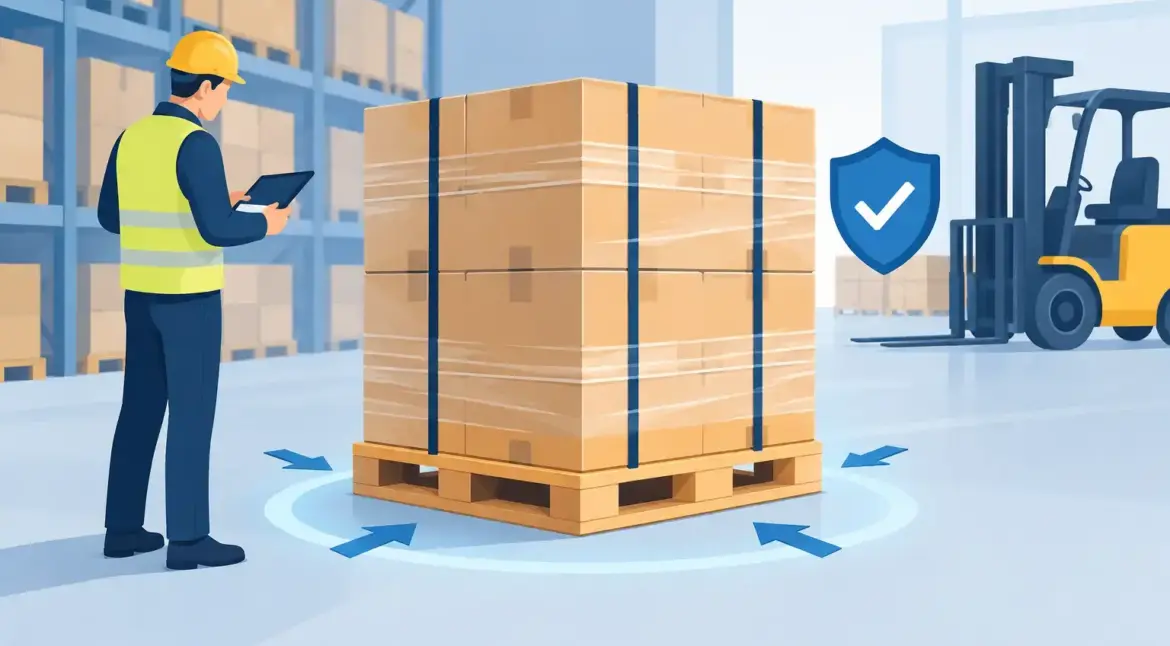
A pallet can leave the plant looking secure and still arrive as a damage claim. The difference is usually not one dramatic failure. It is a series of small issues: cartons that do not support one another, overhang that exposes edges, insufficient containment force, or a load pattern that shifts when the trailer brakes. To optimize pallet load stability, operations teams need to treat the pallet as a complete shipping unit, not simply a stack of boxes.
For manufacturers and distributors, stable pallet loads protect more than product. They reduce rework, rejected deliveries, labor spent restacking freight, customer complaints, and avoidable transportation costs. Time is money, especially when an unstable load interrupts a production line or reaches a customer in unacceptable condition.
Start With the Load, Not the Stretch Film
Stretch film is often the first solution considered when a load moves in transit. It is an essential component, but it cannot correct a poor foundation. If cartons are crushed, the pallet is undersized, or the stacking pattern creates open columns, adding more film may only hide the underlying problem until the load enters the trailer.
Begin with the product and its primary package. Weight, dimensions, center of gravity, surface texture, moisture exposure, and compression strength all affect how the unit load should be built. A pallet of uniform corrugated cases behaves very differently than a mixed load of bags, pails, trays, or irregularly shaped cartons.
Carton strength deserves particular attention. The bottom cases carry the load above them, plus the forces created by warehouse handling and transportation. When those cases lose compression strength, the stack settles. Film tension changes, corners become exposed, and the entire load becomes more likely to lean or collapse. The lowest-cost carton is not always the lowest total-cost choice if it creates product damage downstream.
Choose the Right Pallet Footprint and Condition
A stable load starts with a pallet that properly supports the product. Cases should generally remain within the pallet footprint. Overhang leaves carton edges vulnerable to fork impacts, conveyor contact, and trailer vibration. Underhang can also create problems when the load is too narrow for the pallet, reducing support and wasting trailer space.
Pallet condition matters as much as size. Broken deck boards, protruding nails, inconsistent board spacing, and damaged stringers can compromise load support and create safety concerns for warehouse teams. Standardizing pallet specifications across a facility helps reduce variation in load performance.
A few practical questions can uncover problems quickly: Does the pallet provide full support under the heaviest cases? Are forks entering from the correct direction? Does the pallet remain compatible with racking, conveyors, and customer receiving equipment? A load that is stable on the plant floor may fail if its pallet does not work with the rest of the supply chain.
Build a Stacking Pattern That Shares Weight
The best pallet pattern depends on the carton design, product weight, and distribution environment. Interlocking patterns can improve lateral stability for some loads, but they may reduce vertical compression strength by concentrating weight on carton edges instead of allowing full panel-to-panel contact. Column stacking often provides stronger vertical support, particularly for corrugated cases designed to carry weight through their corners.
There is no single pattern that works for every shipment. A lightweight consumer product shipped through a parcel-heavy distribution network may need a different approach than dense industrial parts moving on a dedicated truckload. The right answer depends on how much compression, vibration, acceleration, and handling the load will experience.
When cases vary in size or strength, place the heaviest and most durable cartons at the bottom. Keep layers level and avoid loose voids that allow cases to shift. If a mixed pallet is necessary, use compatible case sizes where possible and add pads, partitions, or other protective packaging components to create a more uniform surface between layers.
Use Corrugated Components to Control Movement
Corrugated packaging does more than contain the product. It can improve the performance of the entire pallet load. Layer pads distribute weight, protect top surfaces, and create a flatter base for the next tier. Top caps help protect against compression and strap damage. Corner boards add vertical support and protect exposed edges.
For loads with uneven cartons, die-cut corrugated inserts or custom pads can reduce movement that film alone cannot control. Partitions may be necessary when products need separation inside a master carton, especially when breakage or product-to-product contact contributes to damage.
The goal is not to add material without purpose. Every component should solve a known handling, compression, or containment issue. Package engineering can help determine whether a stronger case, a revised flute, a layer pad, or a different pallet pattern provides the most cost-effective improvement.
Apply Stretch Film for Containment, Not Compression
Stretch film should hold the load together as one unit. It should not be expected to carry the full weight of unstable cartons. Proper application begins by anchoring the film securely to the pallet base, then wrapping upward with enough overlap to connect each layer. The film must also capture the load near the top to prevent upper cases from walking during transit.
Containment force is the measure that matters, not simply the number of wraps. Too little force allows the load to shift. Too much force can crush cartons, deform products, or create unnecessary film cost. Film gauge, pre-stretch capability, wrap pattern, and equipment settings must match the load.
Manual wrapping introduces more variation than automated equipment, so documented standards are especially helpful. Define the number of bottom wraps, top wraps, film overlap, and target film use for each load type. Then check performance at the dock, not just immediately after wrapping.
Account for the Real Transportation Environment
A pallet may experience forklifts, dock plates, conveyor transfers, tight turns, sudden stops, road vibration, and temperature changes before it reaches its destination. Loads traveling less-than-truckload freight often face more handling events than dedicated truckload shipments. Food producers may also need to account for refrigerated or humid environments that affect corrugated performance.
Trailer loading practices influence stability as well. Heavy pallets should be loaded to prevent movement and distribute weight appropriately. Void space should be minimized or managed with load bars, dunnage, or other securement methods. A well-wrapped pallet can still shift if it is allowed to move freely in the trailer.
Freight planning should be part of the packaging conversation. When packaging, warehousing, and transportation teams work independently, load failures are more likely to be treated as isolated events. Coordinating the unit load design with freight requirements makes it easier to protect product while improving cube utilization and reducing total delivered cost.
Measure Failures and Test Improvements
Do not rely on assumptions about pallet performance. Track where damage occurs, what product is affected, whether the issue is concentrated by carrier or route, and how frequently loads require restacking. Photographs from receiving locations and warehouse teams can reveal repeat patterns that are not visible in a damage code alone.
Before changing materials across an entire operation, test the revised load under conditions that reflect its actual journey. That may include compression testing, vibration testing, incline impact testing, or controlled shipment trials. A small adjustment in carton design or wrap settings can produce a meaningful reduction in claims, but only if it is validated.
Watch for four recurring warning signs: leaning pallet loads, crushed bottom cases, loose stretch film after transit, and consistent damage at exposed corners. Each points to a different root cause, and each may require a different correction.
Make Stability Part of Total Cost Control
Stable pallet loads are not just a warehouse concern. They affect purchasing, production speed, packaging consumption, freight efficiency, customer satisfaction, and employee safety. A change that adds a small amount of packaging material may still lower total cost if it prevents damaged product, rejected shipments, or emergency replacements.
TEC Business Solutions approaches these decisions as an operational problem, bringing packaging design, product sourcing, warehousing support, and freight coordination into the same conversation. That perspective helps identify whether the best answer is a different corrugated design, a better unit-load configuration, or a change in how freight is prepared and moved.
The next time a pallet arrives damaged, look beyond the visible failure. The most useful fix is usually found by tracing the load from the first carton packed to the final delivery appointment, then improving the point where control was lost.