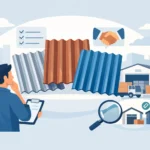

When a load arrives with scuffed finishes, chipped edges, or product-to-product contact marks, the problem is often not the outer box. It is what happens inside the box. Corrugated partitions and pads do the quiet work of separating, stabilizing, and cushioning products so they move through production, storage, and transit with fewer issues and less waste.
For manufacturers and distributors, that matters because damage is rarely a single cost. It shows up as rework, repacking, returns, customer complaints, line slowdowns, and extra freight touches. Time is money, and interior packaging that is designed correctly can protect product quality while keeping your operation moving.
What corrugated partitions and pads actually do
Corrugated partitions create divided spaces inside a carton so individual items stay separated. They are commonly used for glass, metal parts, containers, food products, and other items that can be damaged by contact during shipment. Pads are flat corrugated sheets placed above, below, or between products to add layering, absorb compression, and improve stack strength.
Used together, they turn a simple box into a more controlled packaging system. Partitions help prevent products from striking each other. Pads help distribute weight, create cleaner layers, and reduce abrasion between stacked units. In many applications, that combination protects the product better than adding more outer packaging alone.
That said, performance depends on the product, pack pattern, handling conditions, and shipping environment. A partition set that works well for lightweight plastic containers may not be enough for heavier metal components. A pad that performs well in warehouse stacking may need a different grade if loads are double-stacked in transit or exposed to humidity.
Where corrugated partitions and pads make the biggest impact
The best use cases are operations where product damage comes from internal movement, layer shift, or compression stress. Bottled products are a clear example. When containers knock together inside a case, even minor movement can create scratches, label damage, or breakage. Partitions keep each unit in its own space, while pads separate layers and support vertical stacking.
Industrial components are another strong fit. Painted parts, machined pieces, and assembled goods often need protection from surface damage more than from major impact. A well-designed partition layout can keep edges from rubbing together and reduce the need for secondary wrapping. That lowers material use and can also speed up packing.
Food and bakery operations also benefit when interior packaging has to support both protection and production flow. Products may need clean separation, stable stacking, and consistent pack-out dimensions to keep case packing efficient. In these environments, the right pad or partition is not just about protecting the shipment. It is about helping the line run without interruption.
The operational value goes beyond damage reduction
Most buyers first look at corrugated partitions and pads as protective packaging, but the larger benefit is often operational control. Better fit inside the carton means more consistent packing. More consistent packing means fewer errors, less shifting in transit, and cleaner pallet loads.
It can also improve labor efficiency. If packers are manually arranging products to keep them from touching, the packaging design is doing too little. A properly engineered partition or pad system guides the pack pattern, reduces guesswork, and shortens handling time. That matters on high-volume lines where small delays multiply across shifts.
Freight performance can improve as well. Stable interior packaging helps cases hold shape and stack more reliably, which can reduce pallet instability and load movement. The effect depends on the product and pallet configuration, but in many operations, interior support plays a bigger role in transit performance than people expect.
Choosing the right corrugated partitions and pads
Material selection should start with the product, not the package. Weight, dimensions, fragility, surface sensitivity, and packing orientation all affect what type of corrugated interior packaging will work. The flute profile, board grade, partition height, cell size, and pad thickness all need to match the real handling environment.
For example, taller partitions may be necessary for products that are top-heavy or prone to tipping. Heavier items may require stronger board or tighter cell dimensions to control movement. Pads may need to be sized for load transfer if the goal is to improve stacking strength between layers.
There is always a balance. Overbuilding the package increases material cost and can add unnecessary cube or labor. Underbuilding it creates hidden costs through damage and inconsistency. The right answer is usually not the cheapest component price. It is the design that delivers the lowest total operating cost.
That is why real-world testing matters. Packaging decisions made only from a spec sheet can miss how products behave on a line, in a warehouse, or in a trailer. An experienced packaging partner will look at pack-out method, pallet pattern, freight conditions, and inventory flow before recommending a final design.
Design details that affect performance
Small design decisions can have an outsized effect on results. Cell size in a partition set matters because too much extra space allows movement, while too tight a fit can slow packing or cause product hang-ups. Slot design matters because weak engagement can lead to collapsed cells during assembly or use.
Pad placement matters too. A bottom pad can improve cushioning and create a more stable base. A top pad can protect finishes and improve stacking. Interleaf pads between layers can prevent abrasion and distribute load more evenly. In some applications, adding one well-chosen pad can outperform a more expensive carton upgrade.
Case dimensions are part of the equation as well. If the outer carton is oversized, even strong partitions and pads may not fully control movement. If the carton is too tight, assembly and packing speed can suffer. Good packaging design works as a complete system, not as isolated components.
When custom design makes more sense than stock options
Stock partitions and pads can be a practical choice for standard items and lower-risk shipments. They may also help when speed to market is the top priority. But for many manufacturers, custom sizing delivers better economics over time because it reduces damage, improves cube utilization, and supports faster pack-out.
Custom design is especially valuable when products have unusual shapes, mixed pack configurations, or strict appearance requirements. It is also useful when a business is trying to standardize packaging across multiple SKUs or facilities. In those cases, the design work can simplify procurement and reduce supplier complexity, not just improve protection.
This is where a service-oriented supplier adds value. A company like TEC Business Solutions can help evaluate the packaging need in the context of production, warehousing, and delivery – not just quote a component. That broader view often uncovers savings that do not show up in a line-item price comparison.
Common mistakes that drive up cost
One of the most common mistakes is treating interior packaging as an afterthought. The outer carton gets attention, but the partition or pad is chosen late based on what is available. That often leads to workarounds on the floor, inconsistent pack quality, and preventable damage.
Another mistake is solving every issue by adding more material. More board is not always better. If the root problem is movement, layout and fit may matter more than thickness. If the problem is compression, a pad or board upgrade may help, but so might changing the pallet pattern or reducing unsupported space in the case.
A third mistake is evaluating packaging cost in isolation. A lower unit cost does not help if it increases labor, slows packing, or causes avoidable claims. Procurement, operations, and shipping all have a stake in how corrugated partitions and pads are specified.
Why the right supplier relationship matters
Interior packaging performs best when it is supported by responsive service, consistent quality, and reliable delivery. If partitions arrive out of tolerance, if pads vary in strength, or if supply gaps create line risk, the packaging design cannot do its job. For high-volume operations, supply reliability is part of product performance.
That is why many manufacturers look for more than a box supplier. They need a partner that understands packaging design, inventory planning, and transportation realities. Just-in-time delivery, warehousing support, and coordinated freight can all help reduce the operational friction around packaging supply.
Corrugated partitions and pads may seem simple, but they influence damage rates, labor efficiency, pallet stability, and customer satisfaction all at once. When they are engineered around the product and supported by dependable service, they stop being a commodity and start acting like a cost-control tool.
If your current packaging is doing the minimum, there is usually room to improve protection, speed, or total cost. The right interior packaging does not call attention to itself. It just keeps product moving the way it should.