
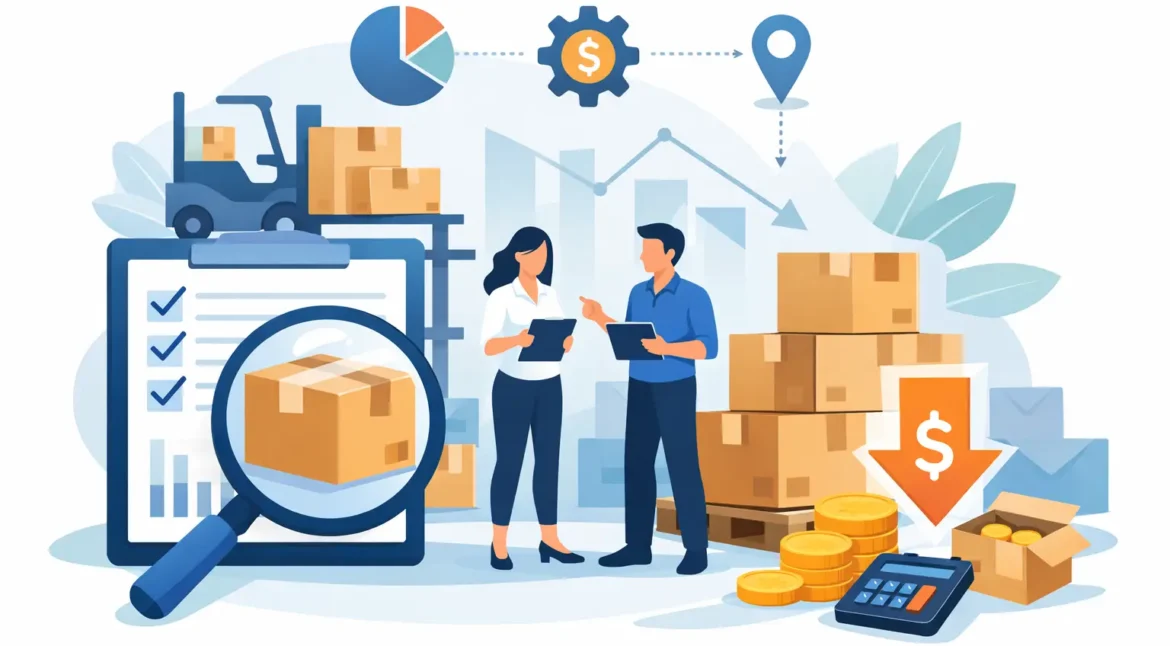
A production line can absorb a lot of pressure, but it cannot run without the right box, insert, pad, or corrugated sheet at the right time. That is why packaging inventory management matters more than many teams expect. When packaging stock is too low, production stalls. When it is too high, cash gets tied up, warehouse space fills up, and obsolete materials start to pile up.
For manufacturers, food producers, and product-based businesses, packaging is not a side purchase. It is a production input. It affects labor efficiency, freight costs, storage requirements, damage rates, and customer service. Managing it well is not about counting boxes. It is about keeping operations moving while controlling total cost.
What packaging inventory management really controls
At a basic level, packaging inventory management is the process of planning, tracking, replenishing, and optimizing packaging materials across production and distribution. That includes everyday items such as corrugated cartons, die-cut boxes, partitions, pads, protective packaging, and display materials. In some operations, it also includes specialized formats tied to product dimensions, food safety requirements, stacking performance, or retail presentation.
The real challenge is that packaging demand rarely moves in a straight line. Orders spike. Product mixes change. Promotions create short-term surges. Seasonal demand affects both volume and timing. A packaging plan that looked right on paper 60 days ago can become a problem on the floor this week.
That is why strong inventory management connects purchasing, warehousing, production scheduling, and freight planning. If those functions are working from different assumptions, inventory either grows quietly in storage or disappears at exactly the wrong moment.
Why packaging inventory management breaks down
Most packaging inventory issues are not caused by one major failure. They come from small disconnects that build over time.
A common problem is ordering by habit instead of current demand. Teams reorder the same quantities each cycle because that is what they have always done. But if product volume changes, case pack changes, or shipping patterns shift, those old reorder habits create excess stock or repeated shortages.
Another issue is treating all packaging materials the same. A standard stock carton and a custom die-cut insert do not carry the same risk. One may be easy to replace quickly, while the other may have a longer lead time, a tooling dependency, or a minimum order quantity that changes the economics. If both are managed with the same reorder logic, service levels suffer.
Space also becomes a hidden cost. Packaging is lightweight compared to many raw materials, but it consumes a large footprint. Overstocked cartons and sheets can crowd staging areas, reduce warehouse flexibility, and create handling inefficiencies that do not show up clearly on a purchase order.
Then there is freight. Emergency replenishment often looks like a supply issue, but it is usually an inventory planning issue that turns into a transportation expense. Paying premium freight to cover a preventable packaging shortage is one of the fastest ways to erase margin.
The cost of getting it wrong
When packaging inventory is poorly managed, the cost does not stay confined to the warehouse. It spreads across the operation.
The most obvious impact is downtime. If a plant has product ready but no approved carton, no partition, or no protective component, finished goods cannot move. Labor gets disrupted, schedules get reworked, and customer commitments come under pressure.
Quality can suffer as well. In a shortage, teams sometimes substitute packaging that is available rather than packaging that is correct. That can create fit issues, weaker stacking performance, product damage in transit, or presentation problems at the customer end.
Overbuying creates a different set of problems. Cash gets locked into materials that may sit for months. If product dimensions, branding, regulatory labeling, or customer specs change, aging inventory can become obsolete before it is used. What looked like a safe buy becomes avoidable waste.
This is where experienced operations leaders focus on total cost rather than unit cost alone. A lower box price means little if the order size is too large, the delivery schedule is inflexible, or the freight model increases landed cost.
How to build a smarter packaging inventory process
The best packaging inventory systems are practical. They match inventory rules to operational reality instead of forcing every item into the same model.
Start with visibility. You need a clear picture of what is on hand, what is committed to production, what is in transit, and what is actually being used by SKU. Many businesses have pieces of this data, but not all of it connected. Without reliable usage data, reordering turns into guesswork.
Next, segment your packaging. Fast-moving stock cartons, custom printed boxes, protective materials, and specialty components should not all be managed the same way. Some items justify higher safety stock because the cost of a shortage is severe. Others should be kept lean because they are easy to replenish or more vulnerable to obsolescence.
Lead time matters here. If a material has a long production cycle, requires design approval, or depends on a specific board grade, it needs tighter planning discipline than a standard item. Safety stock should reflect actual supply risk, not just internal preference.
Forecasting also needs to be grounded in production reality. Historical usage helps, but it is not enough on its own. Forecasts should reflect upcoming customer demand, seasonal volume changes, planned promotions, product launches, and any changes in pack-out configuration. When packaging planning sits too far away from production scheduling, errors multiply.
Where supplier strategy changes the outcome
Packaging inventory management improves when supply partners do more than quote and ship. The right supplier relationship helps reduce variability, shorten response time, and lower the burden on internal teams.
This is especially true when a business is managing multiple packaging types across different plants, product lines, or shipping requirements. Consolidating supply can simplify ordering, improve consistency, and make usage trends easier to manage. It can also reduce the time spent chasing updates from multiple vendors with different lead times, service levels, and freight practices.
Just-in-time delivery is one of the strongest tools in the mix, but it only works when the supplier has the infrastructure and discipline to support it. Smaller, scheduled releases can reduce on-site inventory and free up space, but only if fill rates are dependable and communication is tight. Otherwise, just-in-time turns into just-too-late.
Warehousing and cross-docking can also play a useful role. For companies that want to secure supply without overloading plant storage, off-site inventory programs create a middle ground. Materials are positioned for quick release, but they do not consume valuable production space until needed.
A partner with packaging engineering capability adds another advantage. Sometimes the inventory problem is not just stock level. It is packaging design. A box that ships inefficiently, stores poorly, or requires too many variants creates avoidable complexity. Design standardization, flute optimization, and fit-for-purpose packaging can reduce SKU count and improve inventory performance.
Packaging inventory management and freight are connected
Many companies separate packaging purchasing from transportation decisions, but the costs are linked. Order size, release schedule, plant location, and delivery method all influence total spend.
For example, buying larger quantities may lower the unit price but increase storage cost and handling. Smaller deliveries may reduce warehouse pressure but only make sense if freight is planned efficiently. The right answer depends on volume, distance, consumption rate, and service expectations.
This is why packaging inventory management works best when freight is part of the conversation early. Coordinated transportation planning helps avoid costly rush shipments, supports scheduled replenishment, and creates more predictable flow into the plant. A company like TEC Business Solutions approaches this as an operational system, not a series of disconnected transactions.
What strong performance looks like
You do not need perfect inventory to run a strong operation. You need controlled inventory. That means fewer stockouts, fewer expedites, less obsolete packaging, and better use of working capital. It also means packaging arrives in the right quantities, at the right time, in formats that support production and protect the product.
For most businesses, the goal is not to carry the least inventory possible. The goal is to carry the right inventory for the business you actually run. High-mix production, seasonal demand, custom packaging, and customer-specific requirements all change the answer.
The companies that handle this well treat packaging as part of operations strategy. They measure usage, challenge outdated ordering habits, align supply with production, and build supplier relationships that support responsiveness instead of adding friction.
Time is money, especially when production depends on materials that are easy to overlook until they are missing. Better packaging inventory management starts with a simple shift in thinking: packaging is not just what ships the product. It is what keeps the business moving.