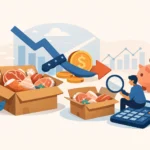

When a production line is waiting on cartons, the lowest box price on paper stops looking like a win. That is where the real conversation around packaging supplier vs integrated logistics starts – not with unit cost alone, but with total operating cost, delivery risk, and how many moving parts your team has to manage every week.
For many manufacturers and product-based businesses, a traditional packaging supplier fills a clear role. You need corrugated cartons, protective packaging, die-cut boxes, partitions, pads, or sheets, and a vendor quotes, produces, and delivers them. That model can work well when demand is stable, forecasts are accurate, and your internal team has the time and systems to coordinate inventory, inbound freight, warehouse flow, and last-minute changes.
The pressure shows up when those conditions break down. A customer accelerates an order. A plant changes pack-out requirements. Inventory is spread across locations. Freight costs climb. Suddenly, packaging is not just a purchasing category. It becomes an operational constraint.
What changes in packaging supplier vs integrated logistics
A packaging supplier typically focuses on the product transaction. You buy boxes or related materials, receive pricing, place orders, and manage the rest through your own operation or through separate providers. The supplier may offer strong product knowledge and dependable service, but its main scope is still packaging supply.
Integrated logistics expands that scope. Instead of stopping at the sale of packaging, the provider helps manage how packaging is engineered, sourced, stored, delivered, and coordinated with production and freight. That can include warehousing, cross-docking, just-in-time delivery, manufacturing support, and transportation management alongside the packaging itself.
That difference matters because most packaging cost is not sitting only in the invoice. It shows up in excess inventory, rushed shipments, plant downtime, inefficient pack designs, damaged product, and the labor required to coordinate multiple vendors. Time is money, and supply chain friction is expensive even when it does not appear as a line item.
A lower unit price is not always a lower total cost
Procurement teams are right to care about price. Competitive sourcing matters. But packaging decisions made on unit cost alone often create hidden expenses elsewhere in the process.
Take a standard corrugated carton. One supplier may offer a slightly lower piece price, but require larger order volumes and longer lead times. That can increase on-hand inventory, consume warehouse space, and tie up cash. Another option may cost a bit more per unit but support better order flexibility, faster replenishment, and coordinated deliveries that match production schedules. The second model can lower total cost even if the box itself is not the cheapest line item.
The same applies to packaging design. An integrated provider with engineering support may recommend a different flute profile, board grade, or die-cut design that reduces material usage, improves palletization, or lowers damage in transit. That is not just a packaging decision. It affects freight density, labor, storage, and claims.
This is why the packaging supplier vs integrated logistics comparison should be framed around operating results. Are you buying packaging, or are you buying a more controlled process?
Where a traditional packaging supplier still makes sense
There are situations where a standard supplier relationship is the right fit. If your packaging needs are simple, your usage is predictable, and your company already has strong internal logistics capabilities, a focused packaging vendor can be efficient. You may not need added services if your warehouse network, transportation management, and production support are already running smoothly.
This model can also work for businesses with limited SKU complexity or highly standardized packaging that does not change often. If the product is straightforward and the operational environment is stable, adding broader service layers may not deliver enough value to justify the shift.
But that depends on internal bandwidth. Many companies think they are managing fine until one missed delivery, one forecast miss, or one customer surge creates a chain reaction across production and shipping.
When integrated logistics becomes the smarter model
Integrated logistics tends to make the biggest difference in environments where packaging and operations are tightly linked. Food producers, manufacturers, industrial companies, and distributors often deal with fluctuating demand, multiple facilities, narrow production windows, and rising freight pressure. In those settings, coordination matters as much as supply.
A provider that can combine packaging sourcing with warehousing and just-in-time delivery helps reduce the need to overbuy. Cross-docking can shorten handling time and keep materials moving. Freight management can align packaging shipments with broader transportation needs rather than treating them as isolated transactions.
There is also a service advantage. When packaging design, inventory planning, and logistics coordination sit under one relationship, accountability becomes clearer. Your team does not have to spend the day sorting out whether the problem belongs to the box supplier, the warehouse, or the carrier. That matters when production schedules are tight and customer commitments are fixed.
The operational impact buyers often underestimate
One of the biggest differences in packaging supplier vs integrated logistics is administrative drag. Separate vendors can create small inefficiencies that add up fast. Your buyers issue more purchase orders. Your team tracks more deliveries. Operations spends more time expediting. Accounting manages more invoices. Customer service deals with more avoidable disruptions.
Vendor consolidation is not just a convenience play. It can improve response time, reduce communication gaps, and make planning more reliable. For plant managers and supply chain leaders, fewer handoffs often means fewer failures.
The right integrated model also improves visibility. If your provider understands packaging demand, delivery cadence, storage constraints, and freight patterns together, recommendations get more practical. They are not quoting boxes in a vacuum. They are helping support production flow.
Service depth is the real differentiator
Not every company offering broader logistics support is truly integrated. Some still operate in silos, with packaging on one side and freight on the other. That can limit the value.
A strong integrated partner connects the details. It can help redesign packaging for better throughput on the line, source materials competitively, stage inventory based on demand patterns, and coordinate delivery schedules that fit plant reality. If freight is part of the service, that transportation support should not be treated as an add-on. It should be part of the same cost-control strategy.
For example, if a provider can warehouse corrugated cartons and release them on a just-in-time basis, you may avoid emergency replenishment and reduce floor congestion. If that same provider can manage freight through a dedicated transportation function, the handoff between packaging readiness and shipment execution gets tighter. That is where integrated support starts affecting margins.
Questions worth asking before you choose
The best decision is usually not ideological. It is operational. Ask where your current costs and disruptions are coming from.
If your team struggles with stockouts, excess packaging inventory, inconsistent lead times, rising freight costs, or too many vendors to manage, an integrated approach deserves serious consideration. If your needs are stable and your internal systems already handle coordination well, a traditional supplier may still be enough.
It also helps to ask what kind of support you need when things go wrong. Anyone can quote a box. The real test is responsiveness when schedules change, materials need to move fast, or a packaging design has to be adjusted to support production. Service matters most when the plan breaks.
That is why many companies move away from a narrow vendor relationship over time. As operations become more complex, the value shifts from buying packaging at a price to securing packaging, logistics, and support in a way that protects throughput.
Packaging supplier vs integrated logistics is really a control question
At its core, this choice is about control over cost, timing, and risk. A packaging supplier can meet a purchasing need. An integrated logistics partner can help manage the chain of events that turns packaging into finished, shipped product.
That does not mean every business needs the same model. It means the right model should match the complexity of your operation and the cost of getting it wrong. For companies that cannot afford production delays, freight surprises, or disconnected service, a broader partner often delivers more value than a lower quote alone.
TEC Business Solutions is built around that reality – not just a box company, but a hands-on partner that helps customers control packaging, movement, and cost across the operation.
If packaging decisions are affecting inventory, production speed, or freight performance, it may be time to stop comparing suppliers by box price alone and start measuring who helps your business run better.