
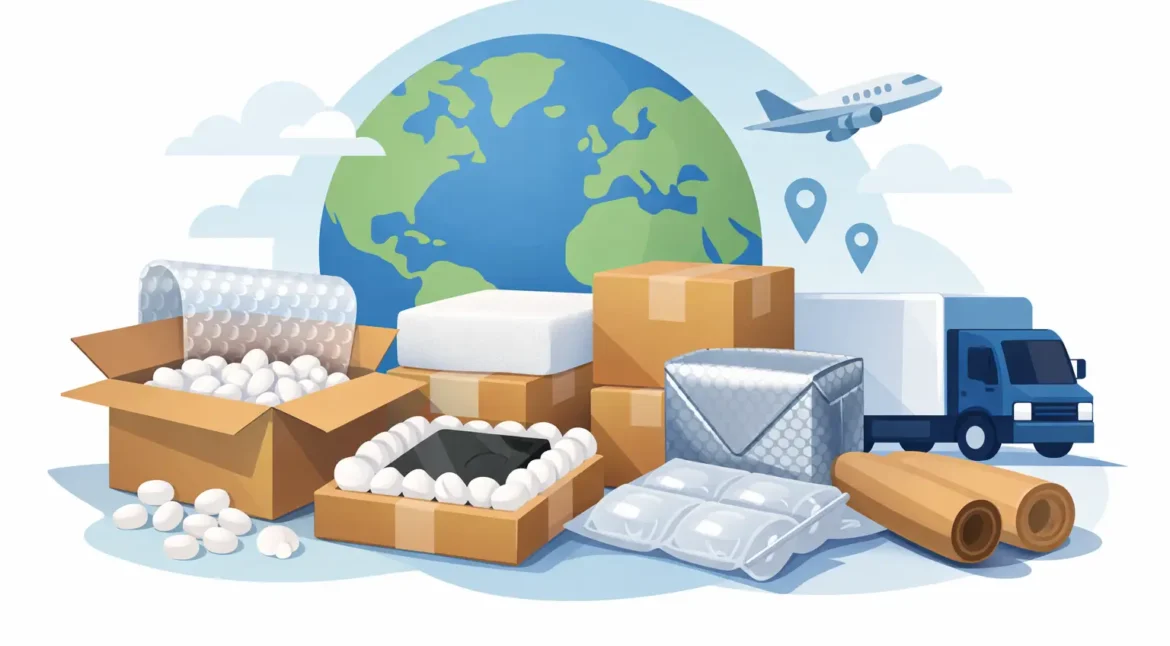
A damaged shipment is rarely just a damaged shipment. It can mean a production delay, a rejected delivery, replacement freight, customer chargebacks, and time pulled from teams that already have too much to manage. The top protective packaging materials are the ones that control those risks without adding unnecessary labor, cube, or material cost.
For manufacturers, food producers, and distributors, the right choice is not simply the material with the most cushioning. It is the material that fits the product, shipping environment, packing process, and total delivered cost. A lightweight item with a delicate finish needs a different solution than a heavy machined component, a stackable bakery product, or a temperature-sensitive food shipment.
How to Choose Protective Packaging Materials
Start with the product’s real points of failure. Consider its weight, shape, surface sensitivity, fragility, and whether it can shift, compress, scratch, or absorb moisture. Then look at the distribution cycle: parcel or LTL freight, long-haul truckload, warehouse handling, stacking requirements, and the number of times the package may be touched before it reaches the customer.
Packaging also has to work at the pack station. A material that offers excellent protection but slows a line, creates excessive waste, or requires too much storage space can raise operating costs quickly. Time is money, especially when packaging availability affects production schedules.
The best protective system often combines an outer corrugated carton with an internal material that holds the product in place, absorbs shock, or separates components. The following materials are among the most practical options for industrial and commercial shipping applications.
Corrugated Inserts, Pads, and Partitions
Corrugated is often the starting point for protective packaging because it can perform several jobs at once. Corrugated pads add layer protection and improve stacking strength. Die-cut inserts cradle products and reduce movement. Partitions separate multiple items inside a carton, preventing product-to-product contact during transit.
For products with consistent dimensions, custom corrugated inserts can be more efficient than loose-fill materials. They make packing more repeatable, help employees pack correctly, and present a cleaner package at receiving. They are also easy to integrate into many operations because they can ship flat and take up less warehouse space before use.
The trade-off is that corrugated inserts are designed around a specific product footprint. If product dimensions change frequently or one carton handles many SKUs, a highly customized insert may not be the best fit. In those cases, adjustable dividers, pads, or a hybrid approach may offer better flexibility.
Best for: Organized product separation and stack strength
Corrugated partitions and pads work especially well for glass containers, food products, metal parts, bottles, electronics accessories, and multi-pack shipments. They are also a practical choice when customers want fiber-based packaging and straightforward recycling options.
Foam Packaging
Foam provides dependable cushioning for products that are heavy, fragile, irregularly shaped, or highly sensitive to shock and vibration. Options such as polyethylene foam, polyurethane foam, and engineered foam profiles can be selected based on the level of cushioning, abrasion resistance, and rigidity required.
Cross-linked polyethylene foam, for example, is often used where a clean appearance and better surface protection matter. It can help prevent scratches on finished goods, painted parts, appliances, and electronics. More flexible foam may be appropriate for products that need soft cushioning or protection from repeated impact.
Foam can add cost and may require more storage space than a flat corrugated solution. It should be specified carefully rather than used by default. The density, thickness, compression characteristics, and product weight all affect performance. Too little foam allows damage. Too much foam adds material expense and can increase carton size, which affects freight cost.
Best for: High-value, fragile, or surface-sensitive products
Use engineered foam when failure is expensive and product geometry demands a close fit. It is particularly effective for precision components, medical devices, electronics, tools, and finished products with cosmetic surfaces.
Bubble Cushioning and Air Pillows
Bubble cushioning is a flexible option for wrapping products, filling voids, and providing light-to-moderate shock absorption. It is fast to use and works well across varied product shapes. For operations packing a changing product mix, that flexibility can reduce the need to stock multiple custom inserts.
Air pillows and inflatable void-fill materials are another useful option when the primary need is preventing movement in a carton. Because they are inflated at the pack station, they require less inbound storage space than pre-formed loose-fill or bulky cushioning materials. That can be valuable in facilities where warehouse space is tight.
Neither material should be expected to carry heavy products or prevent damage from severe impacts on its own. Air pillows are most effective for void fill, not as the sole protective system for dense or sharp-edged items. Bubble material also needs proper wrap coverage and tape control to stay in place throughout transit.
Best for: Flexible packing stations and void fill
These materials fit e-commerce, replacement-parts operations, and distribution environments with broad SKU ranges. They can speed packing when a custom insert is not justified by volume or product consistency.
Molded Pulp and Paper-Based Cushioning
Molded pulp trays, paper pads, and crumpled paper cushioning offer protection with a fiber-based material profile. Molded pulp is shaped to support a particular product and can provide reliable positioning for items such as electronics, glass, appliances, and consumer goods. Paper cushioning can fill voids, wrap items, and support lighter products with less plastic content.
These options can support sustainability objectives, but the decision should still be operational. Molded pulp requires tooling and is generally most suitable for stable, repeatable product designs. Paper cushioning can be effective, but it may need a larger volume of material than foam for certain fragile products. That can increase carton cube and affect transportation spend.
The right choice depends on the distribution environment and the level of protection required. A material that looks sustainable on paper but creates more damaged shipments, oversized cartons, or frequent rework does not reduce total operating cost.
Best for: Repeatable consumer products and fiber-based programs
Paper-based systems are often a good fit when product dimensions are stable, presentation matters, and the company wants to reduce plastic use without sacrificing pack-out consistency.
Loose Fill and Expandable Cushioning
Loose fill remains useful for some irregularly shaped, lightweight products because it adapts around different forms and fills empty space quickly. It can be a practical solution for low-volume packing environments where products vary too much for custom dunnage.
However, loose fill is not always ideal for manufacturing or high-throughput distribution. It can be messy, harder to control at the pack station, and less consistent than engineered inserts. Products may settle during shipment if the carton is not packed properly. For heavy or fragile goods, it is generally better used as secondary void fill alongside a more structured protective component.
Expandable paper or foam-in-place systems can offer a more tailored fit for irregular products. These systems are useful when product shape varies and damage exposure is high, but they require equipment, consumables, operator training, and process control. The operational savings need to justify that investment.
Match Material Performance to Freight Conditions
Protective packaging decisions should account for how products move, not just how they look on a packing table. Parcel shipments experience frequent drops, conveyor handling, and mixed orientation. LTL shipments may face vibration, forklift movement, and long dwell times on docks. Truckload shipments may place greater emphasis on pallet stability, load securement, and compression strength.
Humidity and temperature also matter. Fiber materials can lose strength in wet conditions. Foam and plastic-based materials may provide better moisture resistance, while a poly bag, liner, or moisture barrier may be needed to protect the product itself. Food and temperature-sensitive products may require a separate cold-chain strategy that works alongside the carton and internal protection.
Testing is the practical way to resolve uncertainty. Review damage history, inspect return patterns, and test pack-outs under expected handling conditions. A packaging design that passes a controlled drop or vibration test can prevent expensive surprises after launch.
Look at Total Cost, Not Unit Cost
The lowest-priced protective material is not always the lowest-cost solution. A few cents saved on dunnage can disappear in added labor, larger cartons, higher freight bills, damaged products, or customer dissatisfaction. Conversely, an engineered insert may cost more per unit but reduce pack time, returns, and material variation across shifts.
This is where package engineering and supply chain coordination matter. TEC Business Solutions helps businesses evaluate packaging as part of the full operation, including material sourcing, carton design, inventory availability, just-in-time delivery, warehousing, and freight. The goal is not just to buy protection. It is to prevent disruption while controlling the total cost from production through delivery.
The right question is not, “What is the cheapest cushioning?” Ask which protective packaging system keeps products moving, employees packing efficiently, and customers receiving orders as expected.