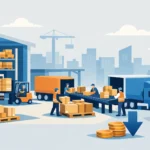

When a production line is waiting on packaging, raw materials, or a customer pickup window is getting tight, freight is no longer a back-office task. It becomes an operations problem fast. That is why freight management for manufacturers has to be treated as part of plant performance, not just transportation booking.
Manufacturers feel freight pressure differently than many other businesses. A missed shipment does not just create an unhappy customer. It can idle labor, disrupt schedules, increase storage costs, and force expensive last-minute changes. Time is money, and freight decisions affect both.
Why freight management for manufacturers is different
Manufacturing freight has more moving parts than standard shipping programs. Plants often juggle inbound materials, packaging components, inter-facility transfers, and outbound finished goods at the same time. Each move has different timing, equipment, handling, and cost requirements.
A distributor might be able to absorb a one-day delay with extra inventory. Many manufacturers cannot. If corrugated cartons, protective packaging, partitions, or custom die-cut boxes do not arrive when needed, production can slow or stop. If outbound freight misses a delivery appointment, finished goods pile up on the floor and warehouse space disappears.
That is where a coordinated approach matters. Good freight management does more than find a truck. It aligns transportation with production schedules, inventory strategy, packaging availability, and customer commitments.
The real cost of unmanaged freight
Freight spend is easy to measure on an invoice. The harder costs are usually larger.
When shipping is managed reactively, manufacturers often pay through accessorial charges, expedited freight, detention, redelivery fees, and underused capacity. Those costs add up quickly, but the operational damage can be worse. Late inbound shipments create downtime. Poor routing creates longer lead times. Weak carrier communication forces plant teams to spend time tracking freight instead of running production.
There is also the issue of packaging and freight working against each other. If a load is poorly unitized, overboxed, or not designed for the mode being used, damage claims rise and transportation efficiency drops. A low unit price on packaging does not help much if it increases freight costs or product loss.
For manufacturers, the goal is not simply cheaper shipping. It is lower total operating cost from receiving through delivery.
What strong freight management looks like
The best freight programs are built around control, visibility, and responsiveness.
Control starts with planning. That means understanding shipment patterns, lane history, product requirements, packaging specs, appointment constraints, and the service levels the business actually needs. Not every load requires the fastest option, but some do. The difference matters.
Visibility means knowing where freight stands before it becomes a problem. Plants need realistic ETAs, active exception management, and quick communication when a pickup is running behind or a delivery window is at risk. Silence is expensive in manufacturing.
Responsiveness is what keeps the plan useful in the real world. Schedules change. Orders move up. Customers add requirements. Production runs long. A freight partner has to adjust quickly without creating confusion across purchasing, warehouse, and customer service teams.
Where manufacturers usually lose money
In many operations, freight has grown in pieces. One carrier handles parcel. Another covers LTL. Full truckload may be managed by a buyer, a shipping clerk, or whoever has the best rate sheet. Expedites happen outside the normal process. Inbound freight is sometimes left to suppliers with little visibility into actual cost or performance.
That fragmented model creates hidden inefficiency. Rates may be inconsistent across lanes. Carriers may not understand the plant’s loading process. Packaging specs may not match transportation realities. Internal teams may be working off different information.
Vendor consolidation can help, but only if it is done with operational discipline. The right partner should simplify execution, not add another layer between the plant and the shipment.
Freight and packaging should be managed together
This is where many manufacturers leave savings on the table. Packaging design and freight performance are closely connected, yet they are often handled separately.
A better carton footprint can improve pallet density. Stronger corrugated construction can reduce damage in transit. The right protective packaging can prevent claims on fragile or irregular products. Cross-docking and just-in-time delivery can reduce on-site inventory and free up floor space. Even something as basic as consistent box sizing can improve trailer utilization.
When packaging and freight are planned together, manufacturers can often lower total delivered cost without sacrificing product protection. Sometimes the best move is reducing material. Other times it is increasing packaging performance to avoid transportation loss. It depends on the product, the lane, and the handling environment.
That is why an integrated provider can be valuable. A company that understands both packaging requirements and transportation coordination is in a better position to solve the full operating problem.
How to improve freight management for manufacturers
Start with shipment data, but do not stop there. Historical freight spend is useful, but lane cost alone will not tell you why problems happen. Review pickup performance, claims, detention, schedule changes, and plant-level disruption. The best opportunities are often tied to recurring operational friction, not just rate variance.
Next, look at inbound and outbound together. Many manufacturers focus heavily on outbound customer shipments while inbound freight stays loosely managed. That is risky. Inbound delays can shut down production just as easily as outbound failures can hurt service.
Then review how packaging supports transportation. Ask whether your current cartons, partitions, pads, protective materials, and pallet patterns are helping freight efficiency or creating avoidable waste. Small design changes can improve cube, reduce damage, and speed up handling at the dock.
Carrier strategy matters too. A broad network has value, but reliability on your lanes matters more than having the longest list. Manufacturers need carriers that understand appointment windows, plant protocols, special handling, and the cost of missed pickups. The cheapest option is often not the lowest-cost option after service failures are included.
Finally, build a communication process that matches production reality. Your plant should not have to chase updates. Shipping status, exceptions, and schedule changes need to move quickly to the people making labor and inventory decisions.
What to expect from a freight partner
A capable freight partner should bring more than capacity. They should understand plant urgency, receiving constraints, and how transportation decisions affect production and customer service.
That means practical support such as lane planning, carrier coordination, shipment tracking, problem escalation, and ongoing cost review. It also means being available when the shipment does not go according to plan, which happens in every supply chain.
The strongest partnerships are built on accountability. If a pickup is at risk, you should hear about it early. If a lane keeps generating extra charges, someone should be investigating why. If packaging changes could improve freight performance, that conversation should happen before costs pile up.
For companies looking to reduce supplier complexity, there is real value in working with a partner that can support packaging supply, warehousing, cross-docking, manufacturing support, and transportation in one coordinated relationship. TEC Business Solutions is built around that model because manufacturers rarely experience these issues one at a time.
The trade-offs that matter
There is no single freight strategy that fits every manufacturer. A food producer with strict timing and product protection needs will make different choices than an industrial business shipping durable goods on flexible lead times.
More inventory can reduce freight urgency, but it raises carrying cost. Lower-cost carriers can help on paper, but missed service can erase those savings fast. Heavier packaging may reduce damage but increase transportation cost. Just-in-time delivery can support lean operations, but it requires dependable execution.
That is why freight management should be tied to business priorities, not handled as a stand-alone cost center. The right answer depends on your production schedule, customer expectations, packaging design, and risk tolerance.
Why this matters now
Manufacturers are still operating in a market where volatility shows up in fuel, labor, lead times, and customer expectations. Freight cannot be treated as an afterthought when it affects so many parts of the operation.
A well-run freight program gives manufacturers more than lower rates. It supports better production flow, cleaner inventory management, stronger delivery performance, and fewer fire drills across the organization. It also gives leadership a clearer picture of where money is being spent and where service risk is building.
If freight is creating downtime, extra handling, or constant schedule pressure, the issue is usually bigger than transportation alone. It is a sign that operations, packaging, and logistics need to be managed as one connected system. When that happens, manufacturers put themselves in a much stronger position to control costs and keep product moving.