
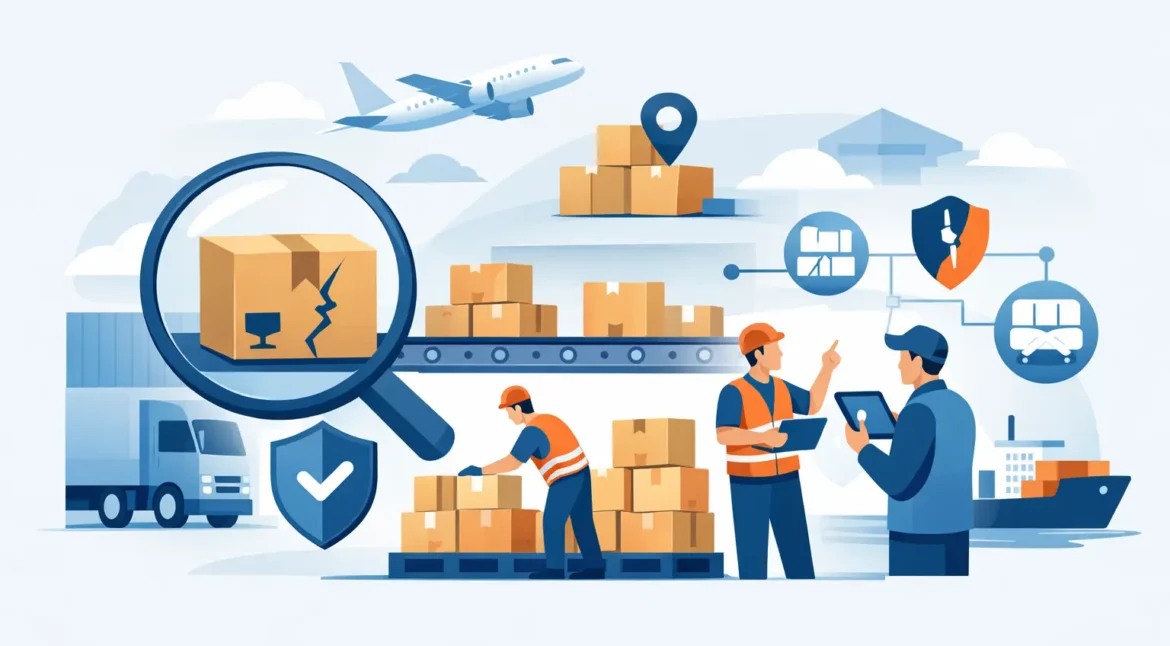
A damaged shipment rarely starts with the truck. It usually starts earlier – with a carton that was undersized for the load, a pallet pattern that looked stable but shifted under braking, or a packaging spec that worked in the plant but failed in transit. If you are looking at how to prevent shipment damage, the real fix is not one material or one quick packaging change. It is a system that matches product, package, handling, storage, and freight conditions.
For manufacturers, food producers, and distributors, shipment damage is not just a claims issue. It drives rework, replacement costs, customer service time, production disruption, and avoidable freight expense. Time is money, and damaged product creates delays at every point in the chain. The good news is that most recurring damage patterns can be reduced when packaging and transportation decisions are made together instead of in separate silos.
How to prevent shipment damage starts with failure analysis
The fastest way to waste money is to overpack everything. The second fastest is to underpack and keep paying for damage. The right approach starts with understanding exactly how and where failures happen.
Look at the actual damage pattern. Crushed corners point to compression issues. Scuffing and punctures often suggest poor void fill, weak board grade, or contact with adjacent loads. Broken seals may indicate internal movement or stack pressure. Wet or softened cartons can point to cold chain exposure, condensation, or warehouse conditions rather than a packaging defect alone.
This is where many businesses miss the mark. They react to a damage claim by adding material everywhere, even when the root cause is load configuration, carrier handling, or an avoidable transfer point. A practical review should include product weight, fragility, case dimensions, pallet overhang, stacking height, warehouse dwell time, and shipment mode. Parcel, LTL, and full truckload create very different hazards.
Match the packaging to the shipping environment
A box that performs well on a short regional run may not hold up through cross-docking, long storage, or mixed-load LTL networks. If your team wants to know how to prevent shipment damage consistently, packaging has to reflect the actual shipping environment, not ideal conditions.
Corrugated selection matters more than many buyers think. Board grade, flute profile, box style, and edge crush strength all affect how a package handles stacking, impact, and vibration. Heavy products may need stronger board construction or partitions to control internal movement. Fragile or food-related products may require added moisture resistance, pads, or die-cut support that keeps items from shifting.
There is always a cost trade-off. Higher-spec packaging can reduce claims, but it also affects material spend, cube efficiency, and freight cost if dimensions increase. The goal is not the strongest package possible. It is the lowest total cost package that arrives intact and moves efficiently through the operation.
Right-size the package
Oversized packaging creates empty space, and empty space creates movement. When product shifts inside the box, the outer package takes concentrated impact instead of distributing force. That leads to corner crush, product breakage, and unhappy receivers.
Right-sizing is one of the simplest ways to improve performance. The product should fit securely with enough protective material to absorb shock without creating pressure points. For multi-item shipments, partitions, pads, or custom inserts often perform better than adding more loose fill. They also improve packing consistency on the floor, which matters when throughput is high.
Use the right protective packaging, not just more of it
Not every product needs foam, and not every void needs paper. Cushioning should be selected based on weight, fragility, and expected handling. A light cosmetic item and a dense industrial component do not respond to impact the same way.
Protective packaging should control three things: movement, shock, and surface contact. If it only does one of those, damage can still occur. This is why engineered packaging often outperforms improvised fixes. It creates repeatable results across shifts, plants, and seasons.
Unit load stability is where many damage problems begin
Individual cases may be well designed and still fail once they are stacked and shipped. In many operations, the palletized load is the real problem.
A stable unit load starts with a proper pallet footprint. Cases should not overhang pallet edges, because overhang weakens the bottom row and increases crush risk. Stacking patterns should support vertical strength while limiting lean and shift. Interlocking can help in some applications, but it can also reduce compression strength compared to column stacking. It depends on product weight, carton construction, and transport conditions.
Stretch wrap is another common weak point. Too little containment force allows movement. Too much can deform cases or damage products. Wrap pattern, film gauge, and pre-stretch settings all matter. Corner boards, top sheets, and banding may also be needed, especially for taller loads or shipments that face repeated handling.
Pallets need the same attention as boxes
Low-quality or inconsistent pallets cause avoidable damage. Broken deck boards, weak stringers, protruding nails, and poor dimensions can all compromise load stability. If pallets are undersized or uneven, even a well-wrapped load can fail during forklift handling or while sitting in a trailer.
For heavier or high-value shipments, standardizing pallet quality is often worth the investment. It reduces movement, improves forklift access, and cuts the chance of product loss from a simple pallet failure.
Handling and warehouse conditions affect transit outcomes
Some shipment damage is blamed on the carrier when it actually happens before pickup. Forklift contact, clamp pressure, poor stacking in storage, and excessive dwell time all weaken packaging before the load ever leaves the dock.
Training matters here. Operators should know where to lift, clamp, and stack each product type. Warehouse teams should also understand which products can be double-stacked, which need top-load protection, and which should never be stored near moisture or temperature swings.
If your operation uses cross-docking or just-in-time delivery, packaging consistency becomes even more important. Faster movement reduces storage exposure, but it also leaves less room to catch errors. Standard work instructions for packing and palletizing help prevent variation that leads to damage later.
Freight planning is part of how to prevent shipment damage
Packaging alone cannot overcome poor transportation planning. Shipment mode, carrier selection, route length, trailer loading, and number of touches all influence damage rates.
LTL freight typically carries higher damage risk than dedicated truckload because freight is handled more often and exposed to mixed commodities. If your product is sensitive to stacking, puncture, or side impact, mode selection deserves a closer look. In some cases, paying more for a different shipping method lowers total cost by reducing claims, reships, and customer credits.
Trailer loading also matters. Heavy items should be placed to limit load shift and prevent crush on lighter goods. Void space between palletized loads should be managed so freight does not migrate during transit. For temperature-sensitive or moisture-sensitive products, trailer condition and routing become part of the packaging strategy.
This is where an integrated partner can create value. When packaging design, warehousing, and freight planning are managed with the same operational goal, the result is usually fewer handoffs, fewer surprises, and better protection from plant to delivery.
Test, measure, and adjust before damage becomes routine
If shipment damage is recurring, treat it like any other operating problem. Measure it. Segment it. Fix the highest-cost failures first.
Track claims by SKU, customer, carrier, lane, packaging format, and season. A summer moisture problem may not show up in winter. A packaging spec that survives truckload may fail in parcel or LTL. The more specific the data, the faster the corrective action.
Testing is also worth the effort. Compression, vibration, and drop testing can reveal weak points before they become expensive field issues. Even simple in-house reviews of returned packaging can show where reinforcement or redesign is needed. The point is to move from guesswork to evidence.
For many companies, the best improvements come from small, targeted changes: adjusting flute type, adding partitions, reducing case size, improving stretch-wrap settings, or changing pallet patterns. Those are not dramatic moves, but they can cut damage quickly without driving up packaging spend across the board.
TEC Business Solutions works with companies facing exactly this kind of pressure – balancing protection, material cost, production speed, and freight performance. The right answer is usually not more packaging. It is smarter packaging supported by better execution.
If you want fewer damaged shipments, start where the losses really occur: in the gap between packaging decisions and transportation reality. Close that gap, and damage rates usually fall faster than expected.