A box that fails on the line is not a packaging problem. It is a production problem, a freight problem, and usually a cost problem that shows up in more places than expected. That is why package engineering services matter to manufacturers, food producers, and distributors that need packaging to do more than contain a product.
For most operations, packaging affects throughput, labor, storage density, damage rates, pallet configuration, and transportation cost. If the design is off by even a little, the business pays for it over and over again. A carton that uses too much board raises material spend. A case that stacks poorly wastes warehouse space and increases freight cost. A design that slows packing labor can create bottlenecks that hit output long before anyone blames the packaging.
Package engineering services are meant to solve those issues at the source. Instead of treating packaging as a commodity purchase, engineering looks at how the package performs across production, handling, storage, and delivery. The goal is simple – protect the product, support the process, and lower total operating cost.
What package engineering services include
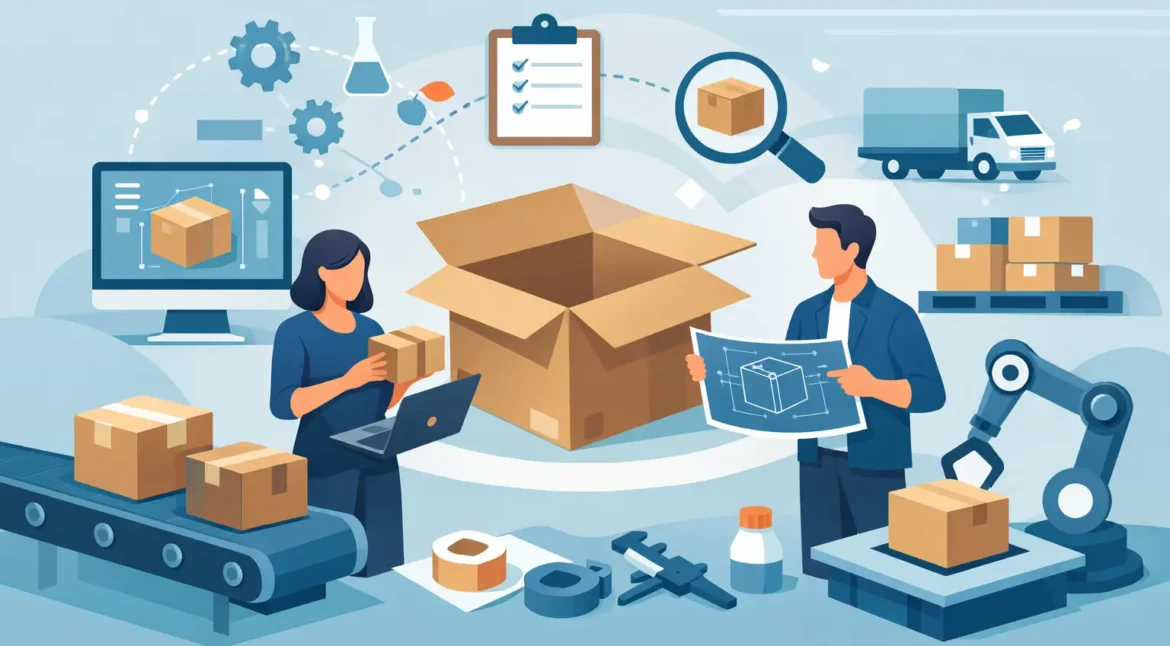
At a practical level, package engineering services combine design, material selection, testing, and process improvement. That can mean reworking a corrugated carton to improve stacking strength, changing flute profiles to reduce board usage without sacrificing protection, or redesigning die-cut boxes so they run more cleanly on the line.
The work often starts with understanding how the package is actually used. A plant manager may be dealing with crushed corners in storage. A procurement lead may be focused on reducing board cost. An operations team may need packaging that packs faster, stores flatter, or arrives just in time to avoid crowding the floor. The right engineering approach depends on which cost is hurting the business most.
This is where many companies see the difference between a supplier and a true operating partner. A supplier can quote a box. An engineering team asks what the box has to do, how it moves through the plant, how it pallets out, how it holds up in transit, and what it costs the business when it does not perform.
Why package engineering services affect more than packaging cost
The mistake many companies make is measuring packaging only by unit price. Lower cost per box sounds good until that cheaper design increases damage claims, adds packing time, or leads to emergency replacement orders. Total cost tells the real story.
A well-engineered package can reduce corrugated usage, but that is only one piece of the value. It can also improve cube utilization, stabilize pallet loads, reduce touches, and limit downtime caused by poor fit or inconsistent quality. In some cases, a slightly higher unit cost saves far more in freight, labor, and product loss.
That trade-off matters in high-volume environments. If a packaging change saves two seconds per pack-out cycle, the labor impact can be substantial over a month. If a redesigned shipper allows more units per pallet, freight cost per delivered unit drops. If the package resists moisture or compression more effectively, returns and damage complaints may fall quickly. None of that shows up in a basic box quote.
Where engineering creates the biggest gains
The strongest packaging improvements usually happen where packaging intersects with operations. That includes line efficiency, material consumption, transportation, and product protection.
On the production floor, packaging has to fit the pace of the operation. If cases are difficult to erect, inconsistent in dimensions, or poorly suited to the product, labor slows down. Engineering can simplify pack-out, improve loading orientation, and reduce the adjustments operators have to make.
In storage and shipping, dimensional accuracy matters just as much. The wrong case size can create empty space, unstable stacking, or wasted trailer capacity. Better design often means a tighter fit, stronger pallet pattern, and better use of warehouse space. For businesses moving large volumes, those gains add up fast.
Protection is another area where engineering pays for itself. Overpackaging drives cost up, but underpackaging creates risk. The right answer is not always more material. Sometimes it is a better board grade, a different flute, an interior partition, a pad, or a structural change that controls movement and distributes load more effectively.
How the engineering process should work
Good package engineering is not done in isolation. It should begin with questions about product weight, fragility, moisture exposure, storage conditions, pallet requirements, shipping method, and line conditions. It should also account for real constraints such as inventory space, lead times, equipment limitations, and customer packaging requirements.
From there, the focus shifts to design and material decisions. Corrugated selection is a common example. A heavier board is not automatically better if it adds cost without improving performance. Likewise, a lighter board is not a win if it creates failures in stacking or transport. The right choice depends on the product, distribution environment, and handling profile.
Testing and validation matter just as much as design. A package that looks good on paper still needs to work in real conditions. Compression strength, drop performance, moisture resistance, and pallet stability all need to be considered based on how the product ships. In many cases, the best solution comes from refining the design after observing actual performance.
That is why responsive support matters. Packaging needs change. Product dimensions change. Freight patterns change. Customer requirements change. An engineering partner should be able to adjust designs without slowing the business down.
What buyers should expect from a packaging partner
If you are evaluating package engineering services, look beyond design capability alone. The best results come when engineering is connected to sourcing, inventory support, and logistics coordination.
A smart design has limited value if supply is inconsistent. The same is true if packaging arrives late, takes up too much space, or requires multiple vendors to manage. For many manufacturers, the operational burden is just as important as the package itself. Fewer suppliers, tighter coordination, and dependable delivery reduce risk across the board.
That is why many businesses prefer a partner that can support package design, product sourcing, warehousing, just-in-time delivery, and freight management together. When those functions are coordinated, decisions get made with the full operating picture in mind. A packaging change can be evaluated not only for material cost, but also for delivery frequency, storage needs, and freight efficiency.
TEC Business Solutions operates in that space – not just as a box company, but as a packaging and supply chain partner focused on lowering total operating cost. For buyers under pressure to improve service and reduce complexity, that model makes practical sense.
When custom engineering makes sense
Not every package needs a ground-up redesign. Standard solutions can work well when the product, handling conditions, and shipping profile are straightforward. Custom engineering makes the most sense when the business is facing recurring cost, quality, or service issues that standard packaging does not solve.
That may include products with damage problems, awkward dimensions, high-volume pack-out demands, or unique retail and distribution requirements. It also makes sense when packaging affects automation, branding display, food safety considerations, or freight density in a meaningful way.
The key is to avoid changing packaging for the sake of change. Good engineering should solve a clear problem. It should improve measurable outcomes such as labor efficiency, damage reduction, inventory management, freight utilization, or material usage. If it does not move one of those metrics, the redesign may not be worth the disruption.
The real value of package engineering services
The strongest packaging programs are built around performance, not just price. Package engineering services help businesses make smarter trade-offs between cost, protection, speed, and supply chain efficiency. That matters whether you are shipping bakery boxes, meat boxes, industrial components, POP displays, or custom corrugated packaging for a specialized application.
When packaging is engineered well, it supports production instead of slowing it down. It protects the product without wasting material. It fits the warehouse, the trailer, and the customer expectation more effectively. Most of all, it reduces the hidden costs that come from treating packaging like a simple commodity purchase.
Time is money on the plant floor and in the supply chain. The right packaging should help you keep both working in your favor.