
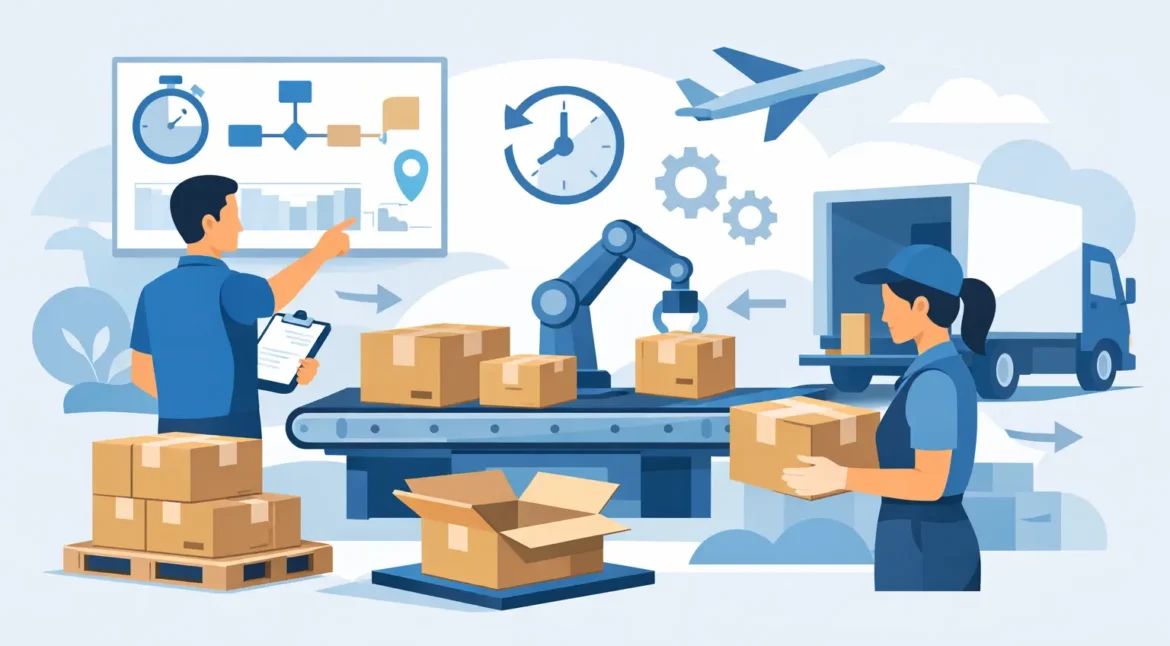
A late truck with the wrong box size can shut down a production line faster than a machine fault. That is why companies looking to improve just in time packaging usually are not chasing a packaging upgrade for its own sake. They are trying to protect uptime, reduce carrying costs, and keep materials flowing without tying up cash in excess inventory.
Just-in-time packaging works when supply, design, inventory, and transportation are managed as one operating system. It breaks down when those functions are handled in silos. If purchasing is focused only on unit cost, operations is fighting shortages, and freight is reacting at the last minute, the business often ends up paying more overall. Better just-in-time packaging starts with a wider view of cost and a tighter grip on execution.
What just-in-time packaging really affects
Most teams think about packaging as an input that needs to arrive on time. That is true, but it is only part of the picture. Packaging affects line speed, storage utilization, damage rates, labor efficiency, and outbound freight performance. A carton that is technically cheaper can still increase total cost if it slows packing, wastes trailer space, or fails under normal handling.
In a just-in-time model, small mistakes tend to get exposed quickly because there is less buffer inventory to hide them. If dimensions are inconsistent, if board strength is off, or if deliveries are not aligned with production schedules, the result is immediate pressure on the floor. That is why improving the system means improving reliability first and price second.
How to improve just in time packaging without adding risk
The fastest way to improve just in time packaging is to stop treating packaging as a commodity purchase. For high-volume manufacturers and product businesses, packaging is a production-critical material. It needs the same planning discipline as any other input that can stop the line.
Start by looking at where packaging failures create operational cost. For one company, the problem may be stockouts caused by long lead times and poor visibility. For another, it may be overordering because no one trusts the delivery schedule. In food production, the issue may center on sanitation requirements, moisture resistance, or package performance under cold-chain conditions. The right fix depends on the operating environment.
Forecast against production reality
A clean just-in-time packaging program begins with demand visibility. Forecasts should reflect real production schedules, seasonality, customer order patterns, and promotional spikes. If packaging demand is based on outdated averages instead of current plant activity, shortages and rush orders become routine.
That does not mean forecasts need to be perfect. It means they need to be shared, updated, and tied to action. When packaging partners can see likely demand changes early, they can plan raw materials, production runs, warehousing, and delivery schedules more effectively. That reduces panic buying and improves fill rates.
Engineer packaging for consistency, not just cost
Packaging design has a direct impact on just-in-time performance. Standardizing sizes where possible can simplify purchasing, inventory management, and transportation. Right-sizing cartons can cut corrugated consumption and freight waste at the same time. Stronger design in the right places can reduce damage claims without increasing material unnecessarily.
The trade-off is that overengineering raises costs and underengineering creates failures. The goal is not the heaviest board or the lowest material spec. The goal is the right design for the product, handling environment, and delivery method. That takes package engineering discipline, especially when products vary by weight, stacking pattern, or storage conditions.
Keep the right inventory in the right place
Just-in-time does not mean zero inventory. It means carrying inventory with purpose. Many companies create unnecessary risk by pushing stock levels too low without improving replenishment reliability. Others tie up capital by keeping too much packaging on site because they do not trust suppliers to respond quickly.
A better model often includes a mix of on-site stock, supplier-managed inventory, and off-site warehousing. Cross-docking can help when materials need to move quickly across locations without extended storage. For businesses with multiple SKUs or multiple plants, inventory positioning matters as much as the total inventory count.
Improve just in time packaging through supplier coordination
If your packaging supplier only ships boxes, you still have to manage forecasting, storage, delivery timing, and freight exceptions internally. That can work, but it creates handoffs where delays and cost often grow. Companies usually see better results when packaging supply is coordinated with logistics and operational support.
A dependable partner should understand your production cadence, minimum run needs, warehouse constraints, and service expectations. They should also be able to respond when schedules change. In real operations, demand shifts, customer orders move, and transportation issues happen. The question is whether your supplier setup can absorb those changes without putting production at risk.
This is where consolidation can help. When packaging sourcing, design support, warehousing, and freight coordination are aligned, communication gets shorter and decisions get faster. That does not guarantee lower cost in every line item, but it often lowers total operating cost because the system is easier to control.
Measure the costs that usually get missed
Companies trying to improve just in time packaging should track more than packaging price per unit. The hidden costs are often larger than expected. Rush freight, line stoppages, excess floor inventory, damage, repacking labor, and poor trailer utilization can all come back to packaging decisions.
A lower board cost does not mean much if the shipment cubes out early and raises freight per unit. A bargain supplier is not a bargain if service misses force emergency buys. Procurement teams and operations leaders get better results when they review packaging through total cost, not just purchase price.
Where freight and packaging intersect
Packaging and freight should never be planned separately in a just-in-time model. Carton dimensions, stacking strength, pallet patterns, and load stability all affect transportation cost and delivery reliability. If packaging is designed without considering how it moves, savings on material can disappear on the truck.
For example, a die-cut box may improve presentation or fit, but if it reduces pallet density, freight cost can rise. Partitions or pads may add material cost while lowering damage and rework enough to more than pay for themselves. Corrugated sheet quality can influence stacking performance in transit, which affects claim exposure and customer satisfaction.
The point is simple. Packaging must perform from pack-out through delivery, not just on the purchasing spreadsheet. Businesses that coordinate packaging design with freight planning usually have fewer surprises and more control over landed cost.
Common signs your system needs work
You probably need to improve just in time packaging if teams are placing frequent emergency orders, floor space is crowded with buffer stock, or production planners do not trust packaging availability. Other warning signs include inconsistent box performance, recurring freight expedites, and too many packaging SKUs that differ only slightly.
You may also see disconnects between plants, purchasing, and warehouse teams. One group wants lower inventory, another wants more safety stock, and no one has a shared service plan. That usually points to a system problem, not a people problem.
What a stronger program looks like
A stronger just-in-time packaging program is built around predictable flow. Packaging arrives in the right quantities, on the right schedule, and in designs that support the operation. Inventory is lean but not fragile. Freight is planned instead of rushed. And when conditions change, there is enough flexibility in the supply model to adapt quickly.
That kind of performance usually comes from combining practical package engineering, disciplined forecasting, responsive warehousing, and transportation coordination. TEC Business Solutions works with companies that need exactly that kind of support because time is money, and packaging problems rarely stay in the packaging department.
If you are under pressure to cut costs, the answer is not always less packaging or less inventory. Often, the better move is a tighter system that gives your operation fewer chances to fail. When packaging is treated as part of production flow, not just a purchased item, the gains show up where they matter most.

